
Angelica Chéri and Ross Baum Are Getting What They’ve Always ‘Wanted’

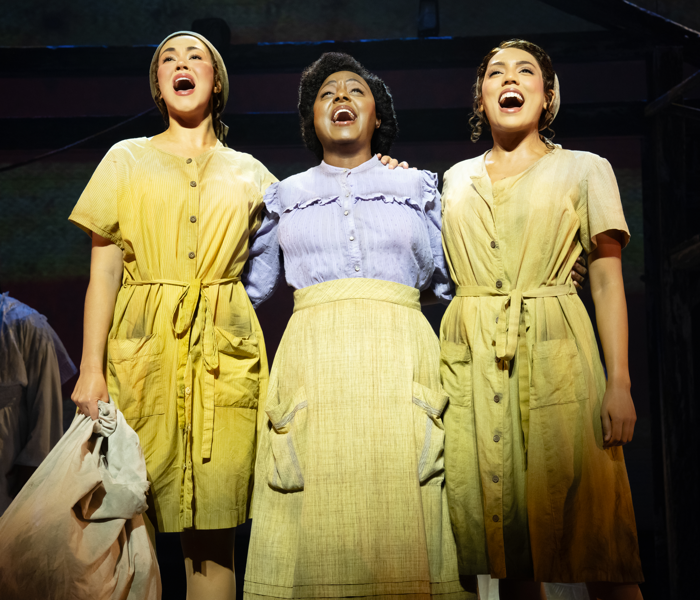
The creators of the new Wild West musical saddle up for their Broadway debut
—
It’s taken a dozen years of development for the new musical Wanted to arrive on Broadway at the James Earl Jones Theatre, but for Angelica Chéri, who wrote the lyrics and book, the journey has been more than a century in the making. The show is inspired by the Wild West story of her great-great-aunts Mary and Martha Clarke, Black twin sisters who presented as white in 1893 Texas and resorted to desperate measures to save their family legacy.
It all started when Chéri, as a kid, was flipping through her grandmother’s photo album “at the kitchen table with some biscuits, okra and sweet potato pie.” She was immediately struck by the light-skinned twin sisters who looked out of place among their 10 Black siblings. Chéri’s grandma regaled her with stories of how the sisters used their ability to pass as white to defy the Jim Crow laws of the segregated South and live as outlaws, stealing to reclaim their long-denied inheritance. Chéri was awestruck. “For them to have this beauty and elegance, and then pull out a gun and rob people, it was hysterical to me and completely mind-blowing,” she says.
Years later, as a student in NYU’s Graduate Musical Theatre Writing program, Chéri was inspired to adapt the legend for the stage along with fellow classmate, composer Ross Baum.
Previously known as Gun & Powder, the musical earned glowing reviews at New Jersey’s Paper Mill Playhouse two years ago. Now, Chéri and Baum are making their shared Broadway debut with Wanted, directed by Tony nominee Stevie Walker-Webb and starring Solea Pfeiffer and Liisi LaFontaine as the gun-toting siblings and Grammy winner Ledisi as their hardworking mom. TDF Stages talked with Chéri and Baum about why this story sings, the rewards of difficult conversations and why Wanted‘s message is so needed right now.
Deziré Tibbs: Angelica, can you share a bit about why you decided to adapt this story as a musical at NYU?
Angelica Chéri: I had come from a playwriting background, so I didn’t go into the program thinking, these are the musicals I’m going to write. I was looking to discover the form, but when I thought about what I would want to spend my whole second year focused on, I remembered that I had this story that belonged uniquely to me and my family, the Clarke ladies. It wasn’t until I started to speak with Ross that I really understood how anthemic and musical their lives could be.
Ross Baum: Mary and Martha are going through the show living a lie but feeling all of these conflicting emotions under the surface. That felt extremely singable to me because music represents the truth underneath the lie. When you give voice to these characters through music, you unearth an entire world of emotion that can’t be expressed any other way.
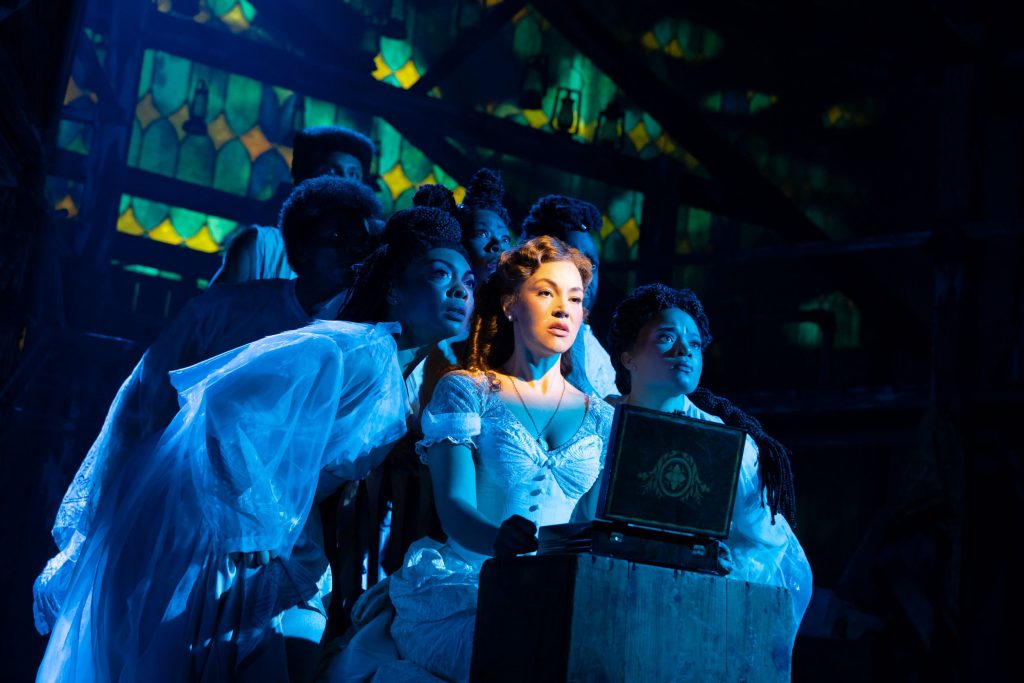
Tibbs: That reminds me of one of my favorite sequences in the musical, the number “Just Passing Through,” when the sisters leave home and encounter white America for the first time. It‘s this fun mix of nonsensical lyrics and familiar music.
Baum: Musically, we actually directly lifted the chords from the opening number. There’s a four-chord progression that, in the opening, represents home and connection to the land. In this song, we turned that into a waltz, twisting their idea of home into something foreign to them, something more “white.” Pair that with Angelica’s lyrics—”something cup of tea, something honeybee, something in a big magnolia tree”—these white Southern images and sayings combined with gibberish, it all meshes together.
Chéri: That’s what I love about musical theatre. You can use music to establish point of view, almost like the lyrics are a camera lens. In that song, we wanted the camera lens to shoot from Mary and Martha’s POV—they’re in a space they’ve never been with people they’ve never been this close to. The way these people speak would sound unintelligible to the sisters. The audience is an outsider like Mary and Martha, trying to listen and understand.
Tibbs: Wanted is set in 1893, an era defined by that clashing of cultures. What can a story like this tell audiences about our world today?
Chéri: I love this question; we talk about this all the time. At that time, slavery had ended, so there was this upward mobility of a Black middle class. That was absolutely terrifying for white America, which was being told that what they had done for hundreds of years was evil and wrong. All the things that had shaped the country were being pulled apart and challenged.
I’d say this is tragically similar to where we find ourselves in 2026. With the rise of new technologies, there’s a massive fear of being replaced or becoming irrelevant. People are fighting with the lowest common human denominator of hate and division and scarcity and displacement and even violence to retain what they’ve always known or what they’ve always had. With Wanted, we’re trying to remind audiences that our humanity is what connects all of us.
Baum: I just think it’s fascinating that it’s not a period of time that gets talked about, especially in the media. And I think it’s an interesting reflection that goes hand in hand with passing.
Chéri: What’s so chilling and unnerving is that when we started writing the show, Michael Brown had just been killed in Ferguson. That was our touchpoint. And it’s sad that now, in 2026, this feels like the most relevant time in history for this story with the stripping away of human rights—rights my ancestors died for.
Ross being a Jewish man understands diaspora. He understands the experience of your people being scattered after fleeing dehumanizing situations. We can have those cultural conversions because there are so many links between us in our ancestry.
Baum: My grandmother and her sister left home in 1939 in search of a better life. She never actually spoke about the details of what that journey was, so she’s somewhat of a mythological figure in my own family. When Angelica shared the story of her two great-great-aunts, who left home in search of a better life, defied all the odds, became women on this epic journey of self-discovery and self-determination, I immediately thought of my own grandmother and felt connected to my own ancestry. I think our collaboration speaks to the entire point of the show. We’ve developed a trust with each other, and we’ve had the hard conversations. We understand each other because we’ve listened to each other.
Chéri: Ross has brought out the best in me and continues to call out a higher version of me. We have shown each other so much grace and grown together immensely.
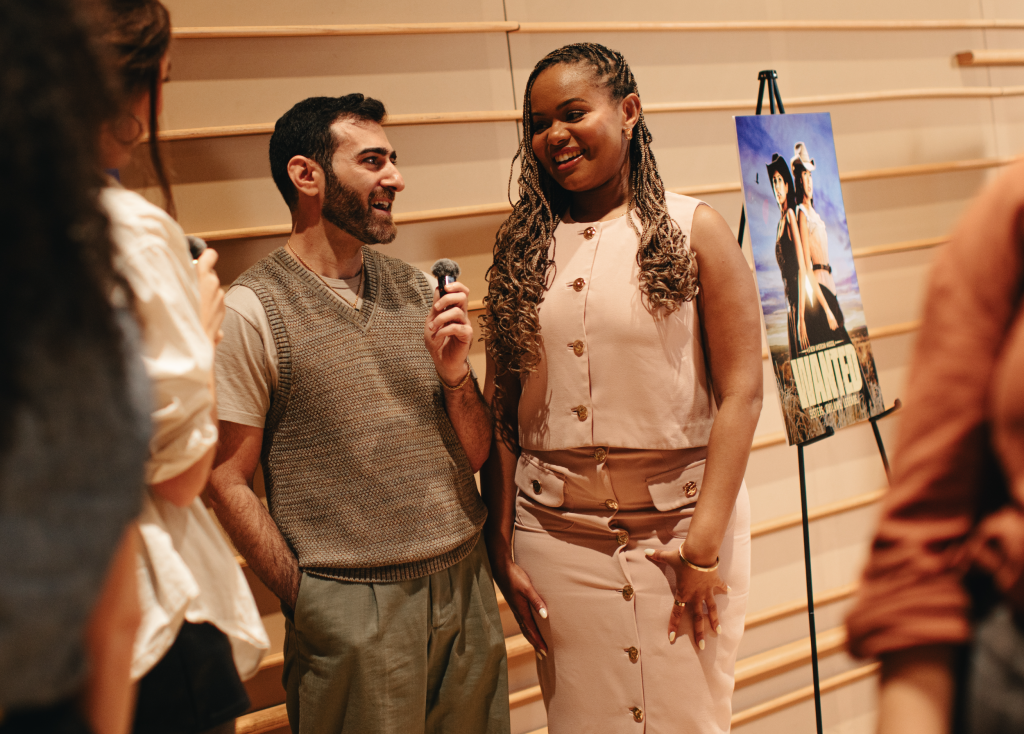
Tibbs: Do you have any advice about starting those difficult conversations with collaborators, colleagues, even friends?
Chéri: Ask, is what you have to lose greater if you decide not to have the conversation? Is it greater than what you would gain if you decide to have the conversation? I think the gain far outweighs the loss.
Baum: It makes me think of the final song in the show, “All of Me,” which is about accepting all of who you are to live your most authentic life and bring your best self to the world. I’ve personally found in the moments that I’m most scared to speak up and finally find the courage to be honest or vulnerable, there’s always catharsis on the other side. Not everybody will accept or understand what you have to say, but at least you’ve stayed true to yourself.
Chéri: It takes courage to have these conversations where you may be subjecting yourself to hurt. Where you share your truth, share your vulnerability, and it gets weaponized against you. How about I be brave and unabashed and you do the same. We can have those kinds of conversations in the theatre.
Baum: Some people like to have face-to-face conversations and some people create art, engaging in those hard conversations through music and creation. It’s all valid, and it all creates that momentum for change.
This interview has been lightly edited for length and clarity.
—
Wanted is frequently available at our TKTS Discount Booths.
TDF MEMBERS: Log in to browse our latest discounts for theatre, dance and music.