
Upper Manhattan Welcomes a Brand-New Theatre for Everyone
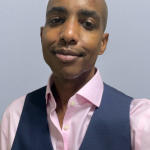
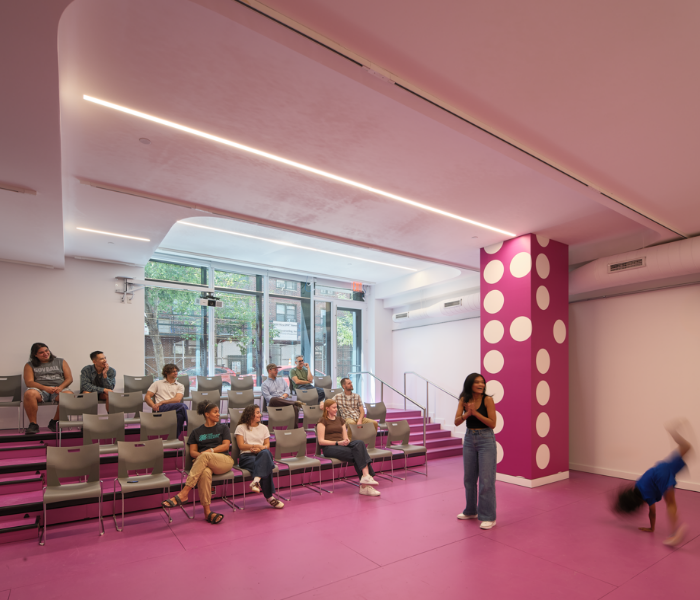
The People’s Theatre founder Mino Lora on working with the community, including Lin-Manuel Miranda, to build Inwood’s first major cultural center
—
It’s a very busy NYC theatre season for Lin-Manuel Miranda. His breakthrough musical In the Heights is being revived at New York City Center this fall, and his new show Warriors is slated to bow on Broadway in the spring. But he’s involved in another venture that’s closer to home, literally: the recently opened Centro Cultural Inmigrante, a $40 million, 19,000-square-foot complex featuring two theatres, an art gallery and a café in Inwood, the neighborhood where he grew up.
Miranda, his father Luis A. Miranda and their Miranda Family Fund contributed $1 million to the project and have been promoting it all over town. That’s because they believe in the vision of Mino Lora, the executive artistic director and cofounder of The People’s Theatre which is behind the center, the first immigrant-focused performing arts venue in New York City.
Its existence is a story of well-fostered goodwill and friendly values that are rooted in community ownership, artistic access and the belief that every neighborhood deserves a cultural home. As the theatre—founded in 2009 and formerly known as the People’s Theatre Project—declares boldly in its mission, “We tell our own stories in our languages, with care and pride, so our communities feel seen, safe and invited to participate.”
True to that spirit, the theatre’s opening production is Guac, a solo show written by James Clements and Manuel Oliver about the latter’s transformation into an activist after his son was killed in the 2018 Parkland shooting. While Oliver has been sharing his deeply personal story for years, this is the first time it’s being presented in a bilingual production in English and Spanish.
TDF Stages spoke with Lora, who was born and raised in the Dominican Republic before immigrating to NYC, about building the complex, her organization’s guiding principles and why every community deserves its own artistic incubator.
Juan Michael Porter II: Let’s start at the beginning: How was The People’s Theatre born?
Mino Lora: It began 18 years ago as my thesis project for my master’s in peace studies and conflict transformation, with the premise that we should all have access to art. We started by working with students, young people, new immigrants in schools, elders and neighbors on creating theatre. Then five years in, I was like: it would be really great if we had an artistic home for this community. After years of fundraising, planning and working with the community, we’re here.
Porter II: It must be a boon for the many artists who live uptown and usually have to travel over 150 blocks to access rehearsal or performance spaces.
Lora: Yes! I believe every working-class community deserves a cultural space of its own. And I’m excited for the economic vibrancy the theatre will create for our neighbors. I hope our work can become a model for others on what a public-private, nonprofit-led partnership can look like.
Porter II: Was there any fear around building the complex at a time when expenses are on the rise and governmental support of the arts is essentially nonexistent?
Lora: Well, one of our values is bravery. So yes, there is an element of nerves when you do something so big. But when you do work rooted in community—like we do with our community productions—our people come and they bring their neighbors. And though we’re living through a period of disinvestment, what guides me is knowing that people and funders come when we tell the stories that come directly from our community. [That happened] even when we didn’t have our own home. I think that being true to our mission as The People’s Theatre means the love and support that we have already seen will continue to expand.
Porter II: How do you ensure that the stories you’re telling are connecting to the community?
Lora: We talk to our audiences. And our audiences trust us because our process of creating comes directly from them. It really resonates that the community onstage is the one that is also in the audience.
In the spring, we have a show that’s being devised by a Chinese immigrant featuring a man who speaks Mandarin. We just had a production with a person who spoke Farsi and a show about a Venezuelan immigrant. We say that this is the home of New York stories. So whether you are directly seeing yourself or you’re coming here to understand the immigrant experience, this space is for you.
Porter II: How do artists go about getting their work on one of your stages?
Lora: There are two ways that can happen. First, there are the things that we produce ourselves. The season is all booked already, but our producers are always looking for and developing work through our Playwrights Unit. The second way is for companies and artists who are creating work that they feel resonates with the mission of The People’s Theatre [to reach out]. We have space to book for people who are self-producing work.
Porter II: Have you thought about what happens if a show becomes so successful that people in your community start getting priced out?
Lora: I love that question. I am really excited for our community to keep us accountable. Like I’ve said, our values guide our work and our decisions on what shows get put on. We also have a matrix of what the whole season looks like to make sure the stories being told are the stories of the community.
We’re also keeping ticket prices right at a level that is reasonable: from $35 to $60. These are our prices. They may be higher for some one-time events, but the prices are accessible. The productions are multilingual. The stories that are told resonate. I think that’s the way that we can most guarantee that the community uptown will continue to come.
All our rehearsal rooms face the street. So if you’re walking by, you’ll see Black and brown bodies creating. And as soon as you enter the space, you’ll hear so many different languages being spoken.
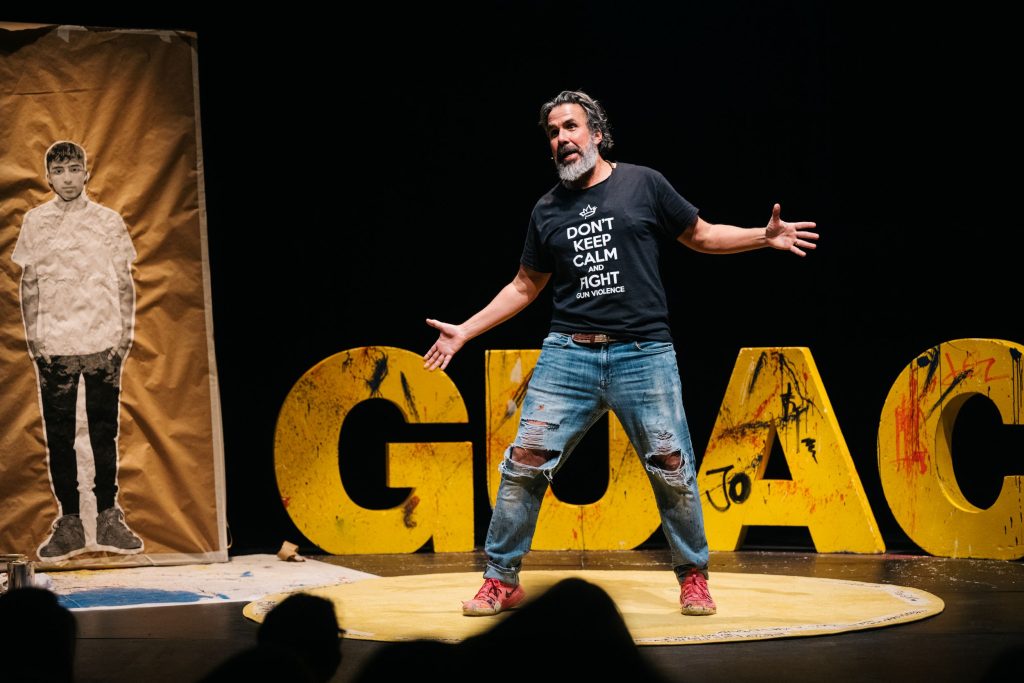
Porter II: After Guac closes on October 10, what can audiences expect from your upcoming programming beyond what’s currently on the calendar?
Lora: A big focus for our inaugural season is to have representation. Our producing director and I are constantly thinking about what are the immigrant communities being represented?
Of course, we can’t do everything all the time, so we’re also looking year by year at specific communities. Right now, we are focusing on Dominican and Chinese communities because they are the two largest immigrant groups in our area. But we know there are so many amazing stories to tell. So we want companies and artists in New York City to reach out and use our spaces to create and produce.
Porter II: What would you say is the biggest key to your success?
Relationships matter. Our work is not transactional, it’s transformational. Folks who you meet when they are interns may one day be in key elected offices. So, build relationships with your neighbors, community and champions, regardless of who they are today. And do it because it’s the right thing to do. Because building transformational relationships will create transformational change. We were a grassroots organization that was talking to our neighbors and that’s still who we are.
This interview has been lightly edited for length and clarity.
—
TDF MEMBERS: At press time, discount tickets were available for Guac. Log in to browse our latest discounts for theatre, dance and music.