
Whitney White and Kristolyn Lloyd Started Out as Mutual Fans, Now They’re Frequent Collaborators

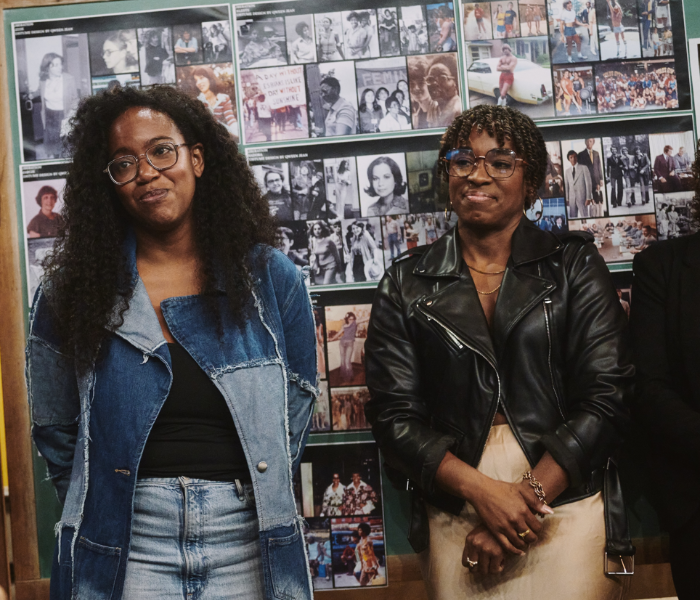
The Tony-nominated director and prolific performer discuss their multi-show collaboration
—
Although they were fans of one another for years, Tony-nominated director Whitney White (Jaja’s African Hair Braiding) and busy stage performer Kristolyn Lloyd (Dear Evan Hansen, myriad Off-Broadway shows) had never worked together until this past January. Clearly it was a happy match—it’s only September and they’re already on their third production.
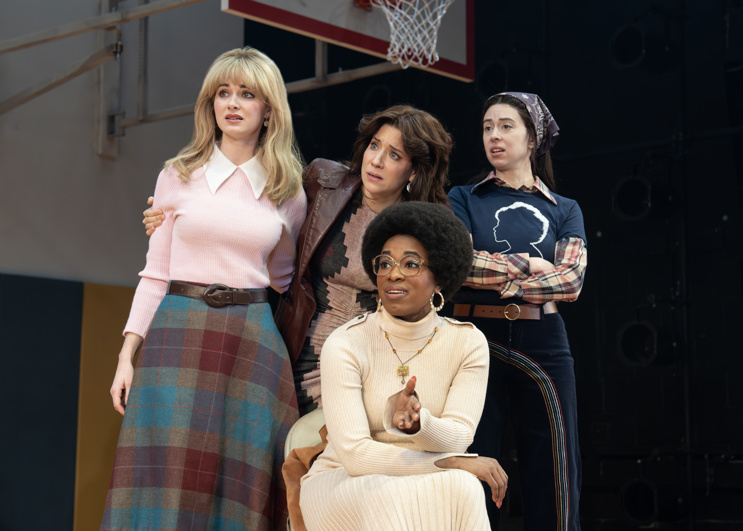
The first was Bess Wohl’s fierce and funny Liberation, which earned raves at Roundabout Theatre Company’s Laura Pels Theatre and is set to transfer to Broadway’s James Earl Jones Theatre for a limited run next month. In between, the duo has reunited at New York Theatre Workshop for Saturday Church, a new musical powered by Sia songs that features a starry cast, including Tony winners J. Harrison Ghee and Joaquina Kalukango.
These two shows—a time-fluid play mainly set during the feminist movement of the early ’70s and a contemporary musical extravaganza about a queer Black youth struggling with his faith—are markedly different in topic, tone and type. Yet Lloyd and White have found plenty of common ground in them, and in each other. TDF Stages sat down with the artists to talk about the church, chosen family, conjuring community and their careers as Black women in the theatre industry.
Regina Robbins: Before Saturday Church even opened, it was extended. That must have been terribly exciting.
Whitney White: It was very exciting! It’s like a blessing because it just means this beautiful cast gets to be together one extra week, which is a miracle.
Robbins: A blessing and a challenge, I imagine, since Liberation begins previews on Broadway on October 8, two weeks before Saturday Church closes.
Kristolyn Lloyd: Yes, absolutely. In a number of ways.
White: I think that my career has been marked by these kinds of transitions. As much as one might want to orchestrate a break, the work demands when it happens. And you have to decide, am I going to meet this moment? If this is the one moment when these two shows can happen, I would rather them happen than not. So I just get the best teams I can to help me be successful.
Lloyd:When I was in Los Angeles, I did a lot of stage work while I was on my soap opera [a multiyear stint on The Bold and the Beautiful]. But this is unique. This is very special.
White: You know what? It’s unique for me, too. The characters at the center of both these shows are very much under attack, and the fact that we get to do two shows that take up the amount of space that they do, this is an opportunity we’re not going to miss.
Lloyd: I feel very lucky when I think about jumping from this beautiful queer-centered story into a show that is just as important for me.
Robbins: The Off-Broadway production of Liberation was the first time you two collaborated, correct?
White: Yeah, but I was a fan of Kristolyn from back in the musical theatre days. I’ll never forget seeing her onstage. Her voice is resplendent, which I think everyone’s going to experience in a new way with Amara, the role she plays in Saturday Church. But then you go and see Sally and Tom and you’re like, wait a minute, that’s the same lady! The versatility is astounding. Also, as a retired musical theatre actor, I’m always so excited when people who are musicians and can sing get to tell different types of stories.
Lloyd: I definitely was a fan of Whitney’s because I kept hearing Whitney’s name.
White: Uh-oh.
Lloyd: And they were like, “She sings, she directs, she acts… Kristolyn, you should know her.” So I looked her up one day, and she just happened to be having this art gallery exhibit inspired by a show that she had created [the original musical Definition]. And I was like, an art gallery exhibit? Who is this intellectual Black nerd? Let me go meet her. And I met her at this installation. Her work is so layered… this brain, if you cracked it open, is just an avalanche. It’s just so creative. So when I went into the room for Liberation, I was like, I need to book this.
White: And book it she did.
Robbins: Whitney, being an extreme multi-hyphenate, I read that you used to hide parts of your résumé depending on the job you were applying for.
White: The energy it took to hide what I was capable of and who I was in order to make someone comfortable took too much… to do that level of code-switching. After a while, it just came out the bag. I’m not saying I do all those things equally well. I think I’m just a storyteller. And there’s lots of ways that all of us are storytellers. Kristolyn is a writer, too, working on her own material. And it’s okay for Black and brown and queer folks to be multi-hyphenates. Lots of other people get the chance. So why not us?
Robbins: Considering the themes of Saturday Church, that’s very appropriate. The protagonist, Ulysses, a New York City teen from a devoutly religious family, is continually being told he’s too big and too much for his community. But when he finds his new queer church family, they can handle all the things he is.
White: I love that. That was a beautiful connection you just drew.
Robbins: I also was struck by the fact that Saturday Church and Liberation are both shows about support groups, even though they’re wildly different ones.
White: Maybe it means I need to go to therapy.
Lloyd: It means you need to facilitate something!
White: They are shows about two groups of people turning to each other when in need. If you look at the way we’re living now, we just don’t do that anymore. The only place we all gather is on the internet. You know, people don’t go bowling, people don’t go to church. So how do we help each other heal? And in what space can you do that? Both plays are looking at that. Two different safe havens.
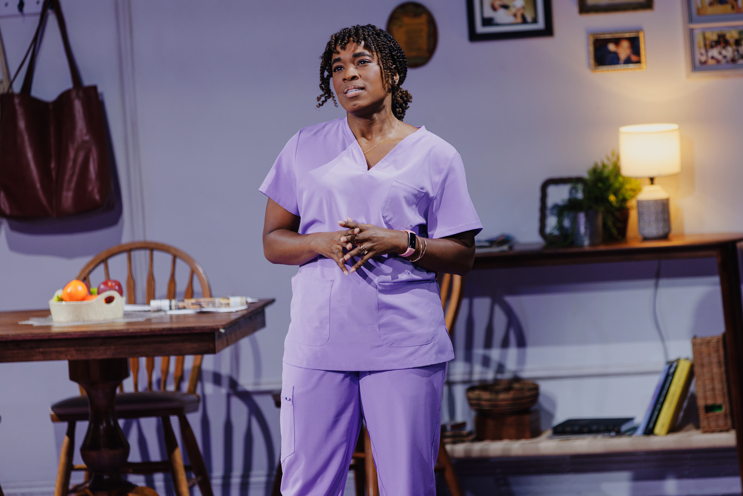
Robbins: Kristolyn, in Saturday Church you play Amara, Ulysses’ loving but stressed-out mother. In Liberation, you’re Celeste, a Radcliffe grad and book editor who returns home to tend to her own ailing mother. Superficially, they are very different people. But do you see any connective tissue?
Lloyd: You know, playing a mother, and then playing a woman who’s taking care of her mother, there’s something about caregiving in there. Amara is there for a young person at the start of their journey and their life in Saturday Church; Celeste in Liberation is there for her mother’s end. When we started rehearsals, I was very aware that these characters were asking me to break open and be super vulnerable, constantly.
White: Watching Kristolyn do both shows is a lesson in the art-making process of creating theatre. And it’s just cool, you know, to watch her sing a minute, and then rip your heart open in a totally different show.
Robbins: You have both spoken in the past about coming from families where church is extremely important. Can you talk a bit about how you bring your lived experience to Saturday Church?
White: Well, the tea about me is that I was raised in this apostolic church on the South Side of Chicago. I talk about it a lot, because it is amazing to this day. Walk into my church and there is a 50-person choir and an eight-piece band, the level of spectacle that goes alongside the worship is high. So when I see a play, I’m like, well, they did that better at my church. But in all seriousness, when I was a young girl, the head of the church was Bishop Brazier. And I remember in middle school, when I used to go with my granddad, that was the first time I heard, in real life, a Black man put intellectual and spiritual thoughts together. And it changed my life. The idea of the church being a space where minds and souls can converge around music is a huge part of my practice. There is something equalizing, not pretentious about the worship space in which I was brought up. I read one review of The Last Five Years [which White directed on Broadway earlier this year] that said they liked it because it was not pretentiously directed, it was for everybody. And I think that definitely comes from the years I spent with my granddad, learning how to be a person in a group, you know? You could fall out in my church, or you could sit with your hands clasped, tapping your toes. It was all kosher. It was all groovy. And that’s a big thing I believe in now. If you’re big in the process, cool. If you’re small, cool. I think sometimes behind the scenes in theatre, there’s a way you’re expected to behave. And why is that? We’re artists, we joined the clown show for a reason, you know, to express. So that’s it. That was a long-winded answer.
Lloyd: It was beautiful, though. Yeah, my church was pretentious. It was Southern Baptist, predominantly white and Christian nationalist adjacent. Once I went to college [Carnegie Mellon University School of Drama], I experienced a Black church. Then I went to LA and in 2009 I quit acting and did missionary work in Indonesia for a year. So much of where I experienced God the most and felt the most belonging was not in church but on the mission field. It was among queer and brown folks once I got to New York. I had never really experienced queer people who still wanted to love Jesus, and that was huge for me. Because once I started exploring different cultures within the Christian community, being an observer to that changed so much about the way I saw God. And that’s how I feel being in this show with this cast… just asking them questions and watching the way that they love God and sing these numbers and really mean it. I struggle still to have a relationship with God because so much of my initial upbringing was a very specific narrative about who I was, what I was to do, where I belonged. It’s not that way here.
White: This show’s really gonna be a hard one to step away from. We have people from the ballroom world, we have dancers, we have Tony winners, we have veterans of the stage, we have a cornucopia of experience, and everybody had a different artistic process. And they made me laugh every day. Every day we kikied!
Lloyd: Despite the stress that the schedule of musical theatre requires, this group has maintained joy.
White: Joy was at the center of this process in a way I have never experienced before. And I hope to carry that forward with me. Both shows have given us support in different ways. And I can’t wait for the audience to get a little bit of it, too.
This interview has been edited for length and clarity.
—
TDF MEMBERS: At press time, discount tickets were available for Liberation. Go here to browse our latest discounts for dance, theatre and concerts.
Liberation is frequently available at our TKTS Discount Booths.