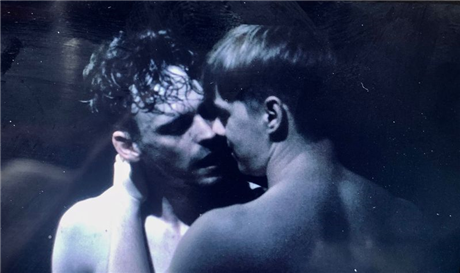
Records of Alan Mathison Turing, of his mathematical-ingenious brain and of the historical facts that are formed around him are surprising, interesting and full of theoretical speculation about the impact that research into athletically built genius has had and still has on the development of artificial intelligence. We can read about his research work, which was crucial to solving the Enigma (a German electric message encryption device used during World War II), about his scientific work at the University of Manchester, about his more than just friend Christopher Morcom, who died prematurely as a result of raw milk poisoning and about his tragic fate.
He saw the human brain not only as a scientist but as a man aware of the breadth of the human spirit and mind. In the perception of the world, he was faster and so unusual to the eyes of every individual in the society of the time that he tailored the world he shared by the personification of his machine in his own way as the only tolerable reality. There, everything was his and otherwise allowed because it was meaningful and understandable only to him. Whoever entered it had to play by its rules, recognize and accept it, even if not fully understand it. Those who failed, however, eventually executed Turing.
COVID-19 Safety Information:
Masks are required.