

Show Finder
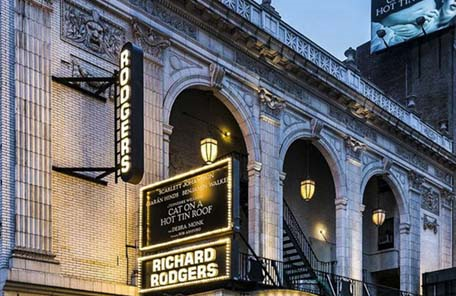
Richard Rodgers Theatre
Website:
broadwaydirect.com
Address
226 West 46th Street
New York City, NY 10036
Public Transport
Accessibility
-
Parking
Several lots are located within one block of the theatre. -
Restroom
Restrooms are available downstairs. The Richard Rodgers is equipped with one wheelchair-accessible restroom in the theatre’s main lobby at street level. This area is strictly designated for guests with disabilities. -
Elevator/Escalator
None -
Water Fountain
A water fountain is available in the lower lounge. -
Assisted Listening System
Headsets for sound augmentation are available at the theatre, free of charge. Photo identification is required as a deposit. Copper Induction Loop also available. -
Wheelchair Info
Wheelchair locations are available in the middle orchestra section of the theatre (pending availability). You may purchase one wheelchair and three companion seats per order if available. -
Entrance
There are no stairs into the theatre from the street. -
Folding Armrests
Mobility seats available for purchase in person or on the phone. -
Visual Assistance
Low vision seats, plus one companion seat, are available in the orchestra. Purchase in person or over the phone.
Theater Description
The Richard Rodgers Theatre was built in 1925 by Irwin Chanin. When it was first opened, it was called Chanin's 46th Street Theatre. Chanin almost immediately leased it to the Shuberts, who bought the building outright in 1931 and renamed it the 46th Street Theatre.In 1982, it was purchased and renovated by the Nederlander Organization, who in 1990 changed the name to the Richard Rodgers Theatre in memory of the composer Richard Rodgers.
It currently holds the distinction of housing the most number, ten, of Tony Award-winning Best Plays and Best Musicals.
The Richard Rodgers Theatre is notable in that it was the first to feature Chanin's 'democratic' seating plan. In earlier Broadway theatres, patrons seated in the cheaper balcony and mezzanine sections utilized separate entrances from patrons who had purchased the more expensive orchestra section seats. Instead, all patrons entered the new theatre through the same doors, and a series of steps inside the house led to the upper seating areas.


