

Show Finder
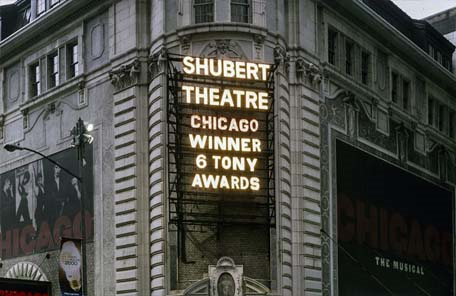
Shubert Theatre
Website:
shubert.nyc
Address
225 West 44th Street
New York City, NY 10036
Public Transport
Accessibility
-
Box Office
Ticket Lobby. Counter 43". Accessible pass-through with writing shelf at 32". Assistance available. Outer lobby. Counter 43.5" -
Curb Ramps
(2.5" lip) NW corner of 44th St. & Broadway; SW corner Broadway & 44th St.; (2.5" lip) SE corner 44th St. & Broadway. -
Restroom
Wheelchair accessible restrooms are located floor-level under the marquee on the Shubert Alley side of the theatre. There is an exterior door to the right of the main entrance. Please see a staff member for assistance. -
Elevator/Escalator
None -
Entrance
Double doors in series: 1st set (each 28.5") has one pair of automatic doors from Shubert Alley to ticket lobby with push-button control. 2nd set (each 28", attended by ushers ) to rear orchestra. -
Visual Assistance
Vision seats available for purchase in person, online or over the phone. -
Folding Armrests
There are sixteen row-end seats with folding armrests. -
Water Fountain
There is a bar in the ticket lobby. A water fountain with a spout at 36" is located in the lower lounge. -
Assisted Listening System
Reservations are not necessary. Drivers license or ID with printed address required as a deposit. Please call: (212) 582-7678 to reserve in advance. -
Wheelchair Info
Wheelchair seating is available. Theatre is not completely wheelchair accessible. There are no steps to the designated wheelchair seating location.
Theater Description
The Shubert TheatreHENRY B. HERTS (1871-1933) WAS KNOWN AS A TECHNICAL INNOVATOR AND INVENTIVE DESIGNER. BORN IN NEW YORK, HE WAS THE SON OF HENRY B. HERTS OF THE HERTS BROTHERS FIRM OF DECORATORS. HE ORIGINALLY WENT TO CITY COLLEGE BUT LEFT BEFORE GRADUATION TO WORK IN THE OFFICE OF ARCHITECT BRUCE PRICE.
Herts eventually graduated from Columbia University in 1893 then traveled to Europe to study architecture at the École des Beaux-Arts and the universities of Rome and Heidelberg. Herts is best known for his partnership with Hugh Tallant. Although, Herts & Tallant were well-known theater architects, the partnership dissolved in 1912, and Herts continued designing with his assistant Herbert J. Krapp and on his own. Herts pioneered the use of steel cantilevers to eliminate the problem of blocked sightlines from pillars supporting the balcony. He also served as architect for the Playground Commission of New York City and helped improve fire codes.


