
As a Feminist, Broadway Is Giving Me Hope

Why a wave of new shows centering female friendships has my vote
We’re living in a moment when #tradwives have replaced #girlbosses in the cultural zeitgeist. Happily, I’ve noticed an encouraging theatre trend to counteract that backslide: stories of friendship and solidarity among strong women onstage.
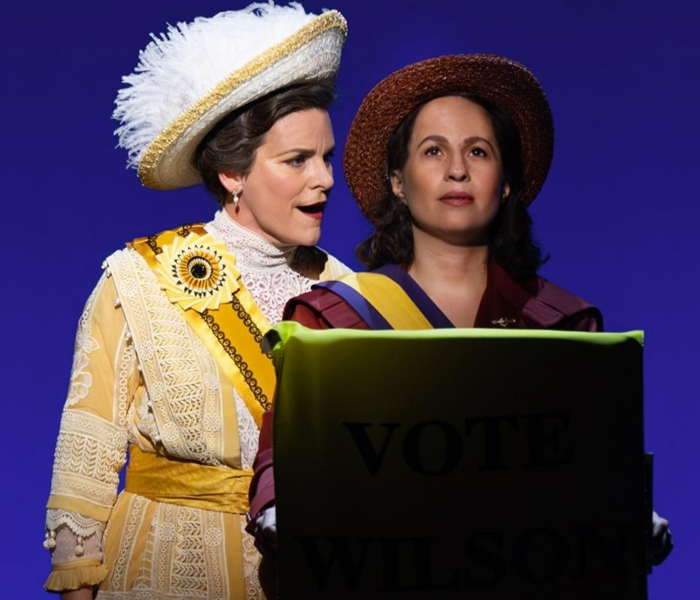
A few years ago, Broadway welcomed Suffs, Shaina Taub’s history-inspired musical about suffragists (not suffragettes!) fighting for the right to vote, which is set to air on PBS this spring. Earlier this season, we were treated to Bess Wohl’s Liberation about a women’s consciousness-raising group in the early 1970s. Last spring, Kimberly Belflower’s John Proctor is the Villain examined the #MeToo movement through the eyes of teenage girls picking apart Arthur Miller’s The Crucible. In Toby Marlow and Lucy Moss’ long-running musical SIX, a half dozen royal exes commiserate and croon about their respective fates. And musicals like Death Becomes Her and the upcoming Beaches explore the nuances of female friendship over the decades.
The Broadway blockbuster-turned-popular movie franchise Wicked is arguably the OG show that paved the way for these theatrical tales of female empowerment and bonding on the commercial stage. I recall seeing the musical in previews back in 2003 when I was a freshman in high school, and I was thrilled that it showed the full arc of Elphaba and Glinda’s friendship. Their mutual repulsion in “Loathing” is set up like a conditional love song in terms of its placement and sentiment, and even their love triangle with Fiyero is really all about the BFFs’ friendship.
With songs by Stephen Schwartz and a book by Winnie Holzman, Wicked may have been initially dismissed by critics as a tale for teenage girls, but two decades later, ”something is not the same”. Today’s shows centering female friendships resonate differently, with an urgency that feels connected to this challenging time for women—and how we need to come together to fight back.
Suffs and Liberation celebrate the power of creating community and working toward a common goal. Broadway shows—musicals especially—typically depict women competing, not enjoying camaraderie. A crucial first step to building the solidarity needed to “keep marching” is supporting one another instead of tearing each other down.
When I was growing up, my best friend and I loved singing show tunes together. But pre-Wicked, there were slim pickings if we wanted to duet, especially from Golden Age musicals. Most of the female duets that did exist would not pass the Bechdel test, as indicated by their titles: “If Momma Was Married,” “Marry the Man Today,” “A Boy Like That/I Have a Love,” etc.
Classic musicals rarely feature two female leads of equal weight. Typically, there’s an ingenue (usually a soprano) and her male love interest, then a comedic, often immodest supporting character with her own beau—Miss Adelaide in Guys and Dolls, Ado Annie in Oklahoma!, Lois Lane in Kiss Me, Kate. Even shows with two meaty parts for women rarely have them sing together—unless it’s about a man.
Coming of age around the millennium, that virgin-whore dichotomy felt reductive, unrelatable, and incredibly retro compared to the Spice Girls’ promise of ‘Girl Power’ and Destiny’s Child’s two-part song about “Independent Women.” As much as I loved old-school musicals, I did not see myself or my friends reflected in those characters.
Perhaps the best-known female duet in classic musical theatre is “Bosom Buddies” from Mame. Admittedly, Mame and Vera are both powerful characters with agency. But the song—and their relationship—is bitchy. It’s all about ragging on each other, especially their looks. Definitely not a relationship I was aspiring to emulate!
Chicago also has two badass women, Roxy and Velma, who belt out a few numbers together as they go from rivals to business partners but never friends. They even seem alone in their two duets: “My Own Best Friend” and “Nowadays,” a celebration of the freedom of the Jazz Age, not each other.
In contrast, I’m heartened by how new shows like Iris Rainer Dart and Mike Stoller’s Beaches explore the full breadth of female friendships. I’m always looking for stories that capture the deep connection that I have with my longtime gal pals. They’re not Mean Girls, Dream Girls or romantic rivals. Honestly, I’m happy for them if they get the guy; I just don’t want him convincing her to move to the suburbs!
I am still close with my childhood best friend, and I would love to finally be able to sing duets that reflect our actual dynamic. Maybe a song about the challenges of maintaining a friendship when we’re at different life stages, since I’m single and childfree and she’s married with two kids. Where are the show tunes about how to find time with friends who work 80-hour weeks in law or tech, or how difficult it is to stay in touch with confidants who move away to pursue their goals in other cities? I want numbers about how we entertain one another and support each other emotionally, mentally, even financially when necessary. Going on vacation together. Weathering loses together. Going to protests together—we’ve been doing a lot more of that lately.
In an era when women’s hard-won rights are being eroded—reproductive choice and access to birth control are only part of what’s being rolled back—we need stories of strong women supporting each other more than ever. We are each other’s heroes and the wind beneath our respective wings, to paraphrase a song from Beaches. Broadway has finally caught on to the power of female friendships.
TDF MEMBERS: Go here to browse our latest discounts for dance, theatre and concerts.