
Can a Solo Show Help Bring Us Together? Ari’el Stachel Hopes So

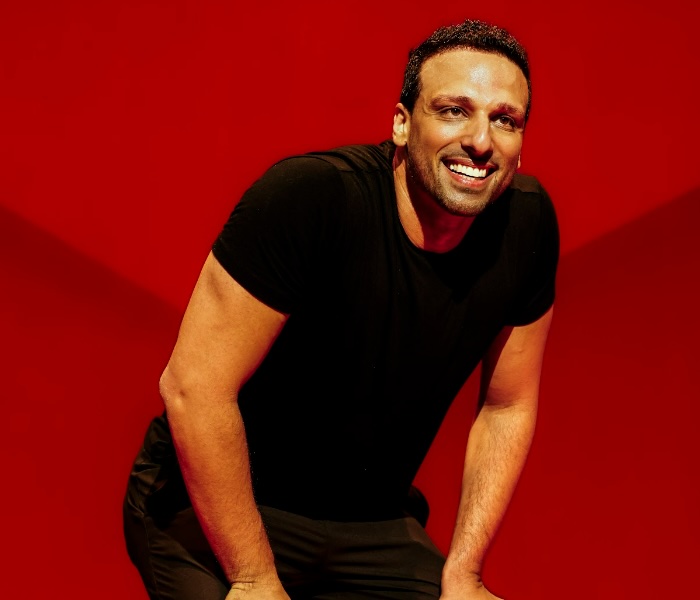
The Band’s Visit Tony winner talks about exploring identity, anxiety and connection in Other
—
In an ever-more polarized world, preaching about what connects us feels almost radical. But that’s precisely what Ari’el Stachel does in Other, his uplifting autobiographical solo show about his long and often darkly hilarious journey to self-acceptance. He had a lot to process: In addition to his multicultural heritage as an Arab-Israeli-Yemenite-Mizrahi Jew, a complex identity he spent decades hiding after September 11, he was diagnosed with OCD, ADHD and general anxiety disorder at an early age. His struggles led him to the stage, where he could pretend to be other people&dmash;in Other, he channels dozens of different characters, including his parents, his pals and Meredith, the judgmental voice in his head who’s named after the villainous wannabe stepmother in the 1998 remake of The Parent Trap. He became such an accomplished performer, he ended up winning a Tony Award for his performance in The Band’s Visit, which marked his Broadway debut.
And yet he still found himself sweating (literally!) the small and the big stuff. That’s what inspired him to write Other, so he could finally reveal and revel in being his authentic self. After a series of regional productions, including runs at Berkeley Repertory Theatre and the Berkshire Theatre Group, the show is currently Off Broadway at the Greenwich House Theater through December 6. TDF Stages chatted with Stachel about the evolution of this intensely personal piece, snagging Tony winner LaChanze as his lead producer and why his post-performance conversations with theatregoers may be his favorite part of the show.
Raven Snook: Your show was originally called Out of Character. For NYC, it’s been rechristened Other. Is that just a change in title or also a shift in perspective?
Ari’el Stachel: The truth is that, as a first-time writer, I had a Zoom where I had to tell the title to the whole team at Berkeley Rep… and I chose it 10 minutes beforehand! The original title had a double meaning for me. It was about the process of stepping out of playing characters and being myself. We opened in July of 2023 and as we were pushing for the show to have a future life, October 7 happened. Producers were saying, “You’re an Arab Jew. It’s got to be about October 7.” Everyone was nudging me to change the play I had written, and that was really challenging. On the one hand, it’s a living, breathing autobiography. On the other hand, I didn’t want to write about something just because it was in the headlines. I wanted it to feel authentic and true. What I found as I explored how to integrate October 7 into the play was that my identity was conditional. The way that I understood myself changed as the world changed. Initially, 9/11 was the event that really changed my sense of self and my sense of the world. Then October 7 happened and completely knocked me on my ass. I had spent like 20 years trying to hide my Arab identity, then it became even more complicated. The Middle Eastern community that I had been trying to include myself in and find pride in, all of a sudden there was a fracture there. And being Jewish and being Israeli became something that I started to feel really self-conscious about. The story I’m telling is one of countless stories in this country of people who can’t easily define themselves, and the rigmarole that we go through trying to neatly fit ourselves into boxes. Coming into this run, it just felt like that is really what this show is about.
Snook: Other begins backstage at the 2018 Tony Awards as your anxiety kicks in after you win a Tony Award for your performance in The Band’s Visit. Is that actually when you got the idea to write this show?
Stachel: I had been wanting to write it for a while. I remember going to school, getting off the bus and being a different person for the day so people wouldn’t see the real me. I’ve always known that story was something that I needed to get out because it was so painful. It felt so isolating my whole life to have this identity that people really didn’t understand. “You’re Arab but you’re Jewish but you’re Yemenite?” People didn’t get it. We’re a small but mighty community, Mizrahi Jews, but we’re missing from the Jewish canon of American storytelling. So this was sort of a mission for me, plus I really struggled with a lot of social anxiety and imposter syndrome after making it to Broadway. Writing was a way to stay creative but not be around people! It was very private.
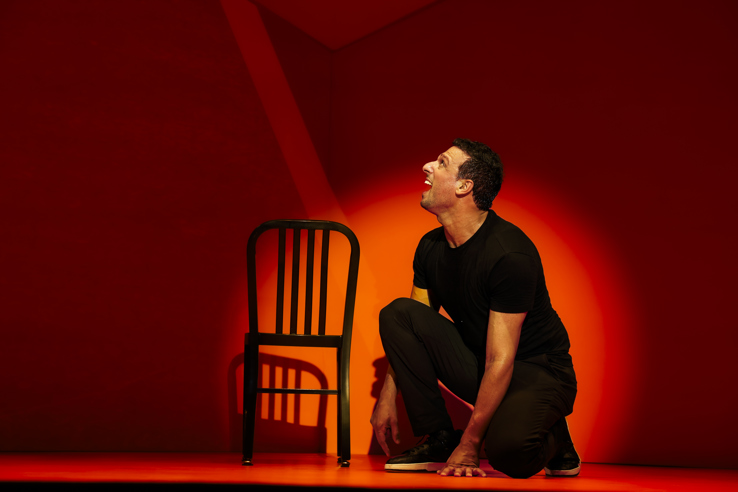
Snook: You’ve been performing different iterations of Other since 2023. Can you tell me a bit about the creative process and how you worked with dramaturg Madeleine Oldham and director Tony Taccone?
Stachel: When Tony and I would struggle to communicate, Madeleine became the midwife. I don’t think we’d be here without her. I would talk her ear off for a month and write seven pages that would end up being distilled into two words. That happened up until the very last day of previews here in New York!
Initially, the show was just about the experience I had concealing my heritage, a feel-good story about once you accept yourself, life is good, right? But when Tony got involved, he kept pushing me, asking, “Why does the adult want to tell the story about this kid who hid his identity?” It came to a head one day in a workshop. “Why the hell does your character, this adult, want to tell this story?” And I said, “Because he wants to feel less anxious!” And he said, “Interesting. Go away and write about that.” The next day I came back with 25 new pages, and it became about the interplay between anxiety and identity. That’s when I really started connecting with people. By confessing my deepest, darkest shame in the first three minutes of my show, saying, “I have a sweating disorder that I can’t control,” it freed me up to do my thing.
Snook: Speaking of connecting with people, how did you get involved with LaChanze, a fellow Tony Award-winning performer who is lead producing Other?
Stachel: The long, winding road of trying to get your art seen! LaChanze saw a workshop at Pace. Afterward, she wrote me this incredibly effusive, beautiful DM and I thought, how amazing is this? A story centered on someone who I imagined had a very different lived experience than her somehow connected to her so deeply. She also felt othered and she also won a Tony and the world didn’t really open up for her in the way that she wanted it to. In so many ways, we’re on parallel paths. We’re both taking these leaps. It feels very organic and very exciting.
Snook: Watching you sweat up there gave me a bit of anxiety—I think your onstage moistness rivals Jonathan Groff‘s!
Stachel: I would be happy to compete with Groff [in moistness]. I’m a competitive guy. I think I’d win! People get worried—oh god, he’s sweating so much. Is he okay? Part of why I’m sweating is that Tony created a marathon. I’m running all around that stage! Honestly, I don’t feel anxious at all doing the show; I feel very free. When we first did it at Berkeley, if things didn’t go perfectly, if a phone rang, if I didn’t get a laugh, if somebody stood up and distracted me, I was on edge. With this run, all of those mistakes are a gift. This show has forced me to be ultra-present. When mistakes happen, I’m thrilled. It’s an opportunity to make the show more alive and more personal for that particular audience.
Snook: You really do seem to make every performance personal. I love all the videos you share on your Instagram of you chatting with theatregoers after the show about their own complex identities.
Stachel: People share things that are profound. There was someone in their seventies of Japanese-American descent, who told me that the play brought them back to their experience of trying to hide their Japanese identity, and thinking about their parents in the internment camps and how much shame they carried. Someone came in a wheelchair and said, “Thank you for telling a story about your disabilities.” And many [non-Ashkenazi] Jews feel proud to be seen. This is why I do theatre, the gift of conversation at the end. My people are like, “Ari, get out of the lobby! Go home, rest your voice.” But I can’t, because that’s the point. It’s 85 minutes onstage but lasts much longer. I love that people feel safe to share things with me after the show.
Snook: One of my favorite aspects of Other is that it encourages audiences to celebrate our different identities while also pointing out that, ultimately, we have so much in common. The play is about connection, even for groups that seem so divided. You talk about making an Instagram post after October 7, saying: “I can’t solve war. But I can be a bridge. I am living breathing proof that Arabs and Jews are one.” You got so much crap for that online, and yet here you are onstage repeating that sentiment, which so many find subversive.
Stachel: My way of dealing with my fear is by being loud about it. I feel that the greatest service I can do is not hide. In my teens and twenties, I really wanted to be liked, I really wanted to be accepted. Now I’m 34 and I accept that when I share things that are vulnerable and true to me, other people will contort it and weaponize it. When I look at Palestinians, it’s very easy for me to see that we’re connected. I see that the division is ludicrous. It’s invented. I’m only speaking with love and with my truth. If that makes some people feel more seen, then that’s a great thing.
This interview has been edited for length and clarity.
—
TDF MEMBERS: At press time, discount tickets were available for Other. Go here to browse our latest discounts for dance, theatre and concerts.