
How Director Jack Serio and Playwright Bubba Weiler Went from DIY to In Demand


The college classmates-turned-collaborators on their back-to-back shows: Well, I’ll Let You Go and The Saviors
—
“If I could make a living only directing plays in lofts, I think I would only direct plays like that,” says Jack Serio. That’s a bold statement coming from a director who has two buzzy shows running in traditional theatres this summer: an encore engagement of the acclaimed Well, I’ll Let You Go at Studio Seaview through June 20, and the world premiere of The Saviors at Atlantic Theater Company from July 8 to August 8, both written by Serio’s erstwhile NYU classmate Bubba Weiler.
Their double header is particularly impressive considering they’re hovering on either side of 30. Yet these artists took a DIY path to their Off-Broadway success. Serio, who ran his own youth theatre troupe in Boston as a teenager, initially made a name for himself in NYC by mounting hyper-intimate shows in nontraditional spaces. Weiler, who grew up acting in Chicago, booked gigs on Broadway and beyond while banging out plays during his downtime.
While they are thrilled their not-for-profit theatre dreams are finally coming true, they’re still very interested in mounting their own work, especially in “weird spaces.” TDF Stages spoke with Serio and Weiler about their burgeoning collaboration, straddling different theatre scenes, and why multihyphenates like Austin Pendleton and David Cromer are their idols.
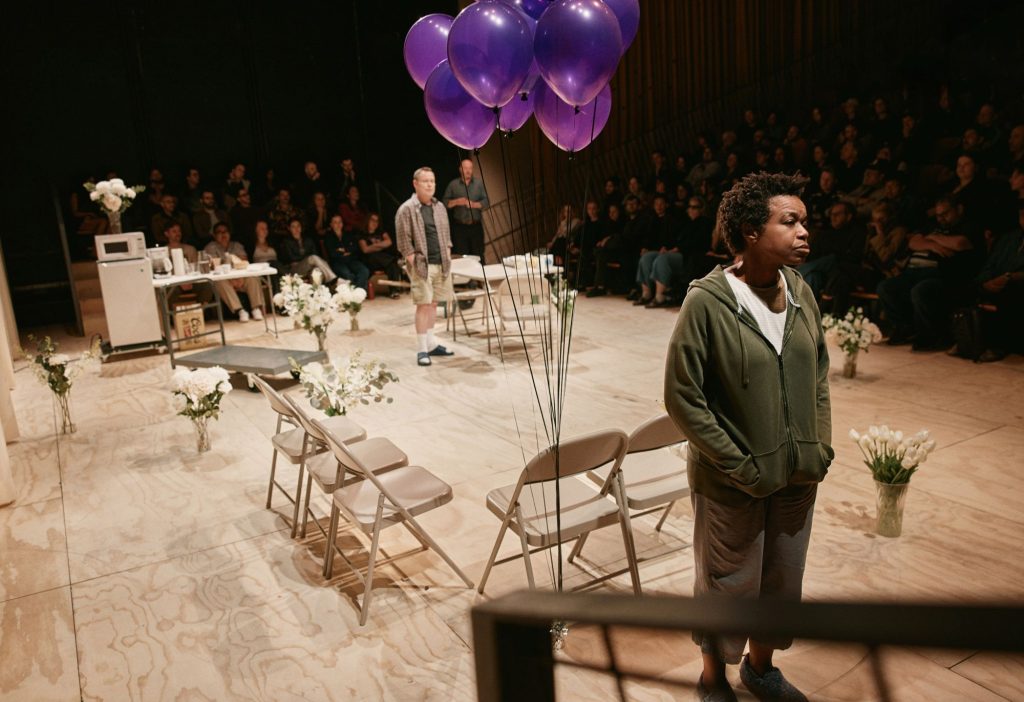
Raven Snook: I first saw Well, I’ll Let You Go at Irondale in Brooklyn last summer, and it was one of the most moving plays I saw all season. I was so excited when I heard it was coming back with the emotionally translucent Quincy Tyler Bernstine as a newly widowed woman questioning the life she shared with her late husband. Your artistic sensibilities seem so in sync, I guess I’m not surprised to hear you met at college.
Bubba Weiler: Yes, we were at NYU’s Playwrights Horizons Theater School together. I was a few years ahead of Jack, so I was the TA for his playwriting class his freshman year. I taught him everything he knows!
Jack Serio: As a TA in my freshman playwriting class!
Weiler: [laughing] I was basically like an admin. But that was the first time we were in the same room together. Then I graduated and was mostly doing acting for the first couple years after school. We reconnected through a mutual friend, Francesca Carpanini, who’s a brilliant actor. Jack, you’ve known Francesca since…
Serio: I was like 13 years old! She was in This Beautiful Future, which I directed.
Weiler: When Jack and Francesca put up This Beautiful Future, I went to see it to support her. That’s when I became a huge fan of Jack’s directing. I started to see everything he did. I happened to get the very last standby ticket on closing night of the second production of his Uncle Vanya [in a Manhattan loft for 40 people a night]. It’s my favorite play and I’d never seen it produced like that. That’s when I thought, I have to work with Jack. I caught him after that show and we talked for a bit, and then I asked him to coffee. It took me like two hours to get up the nerve to say, “By the way, I wrote a play.”
Serio: It was The Saviors [about two altar boys wrestling with their faith and potential futures]. I read it and adored it, and was like, “We must work on this.” You’ll be chuffed to know the two young teens we’ve cast are being bar mitzvahed this year. They both asked for those days off!
Snook: Jack, your Vanya was in 2022. How did The Saviors end up being produced after Well, I’ll Let You Go?
Serio: I was really determined to do it. I sent it out to anyone I kind of knew—I was quite certain it was a not-for-profit play. But the phone never rang. My hunch is no one even read it, because in my email, I was like, “Here’s a great play by a first-time writer, and it stars two children.” So Bubba and I decided we should just do it. Let’s go find a church somewhere and produce this. This was in fall 2024. But the actors we were excited about became unavailable, and the project just wasn’t moving as quickly as we’d hoped. And Bubba was like, “I’ve also written another play,” and that was Well, I’ll Let You Go. We immediately did a reading. I got a group of actors together, including Emily Davis and Amelia Workman, who have been with it through all its iterations. In my mind, it was the harder of the two plays to produce, because it was so much bigger. Bubba came to see this play I did, Danger and Opportunity, and I introduced him to the producer, Jacob Stuckelman. Jacob was eager to do something else with me, and I was like, “You should read Bubba’s play Well, I’ll Let You Go. I think it’s really extraordinary.” And Jacob, being as crazy as I am, said, “When do you want to do it?” A couple of months later we were doing it. After Well, I’ll Let You Go‘s success, a number of folks were like, “What else do you have?” There was a spirited rivalry for The Saviors, and it ended up going to Atlantic.
Snook: So you essentially manifested your own success. Did you study your respective tracks, directing and playwriting, at college?
Weiler: The ethos at Playwrights Horizons Theater School is to train a holistic theatre artist. So you learn design, playwriting, directing, acting, movement, you get a taste of everything. Toward the end of your time there, you narrow down your focus. What’s great is they give you all this space and time and resources to just go and make your own thing. So you learn how to be scrappy and resourceful and just build the muscle of putting something up. I’m really, really grateful that I went there. I had some amazing teachers, especially in playwriting.
Serio: The alumni are crazy: Sam Pinkleton, Rachel Chavkin, Annie Tippe, Susannah Perkins, a lot of self-starters who end up making their own work. I came in as a director knowing that’s what I wanted to do.
Weiler: I had been a child actor in Chicago and I did a ton of new play development as a teenager. I kind of got obsessed with the process of making new work and I started writing plays as a 15-year-old. I’m the youngest of six kids, so my house was always very noisy, and I would write in the middle of the night when it was finally quiet. So I was looking for a college program where I could study both writing and acting. When I graduated, the acting took off. And the thing about being a playwright in New York is you’re supposed to do all these residencies and writers’ groups and fellowships, and my schedule as an actor never allowed for that. So I had to find this backdoor in. Jack was putting stuff up and not waiting around for a nonprofit’s permission. I saw that as an opportunity to just start making, like we did in college.
Snook: I interviewed Becky Shaw playwright Gina Gionfriddo recently, and we bemoaned the lack of support for new play development, not to mention how not-for-profit theatres have been forced to scale back programming due to financial woes.
Serio: When I was in college from 2014 to 2018, the pinnacle of excellence in New York theatre to me was institutional, not-for-profit Off-Broadway theatre. I was seeing things like The Christians and Bootycandy at Playwrights Horizons, and a play that would change my life, Scenes from a Marriage at New York Theatre Workshop. I was like, oh my god, this is the work I want to make! Commercial Off-Broadway wasn’t treated very seriously. It was basically just New World Stages and the Westside Theatre. I graduated a couple years before the pandemic and was never able to get a foothold. I never got any fellowships. Then the pandemic hit, and opportunities dried up for everyone. I had not anticipated making my own work again, as I had done in Boston. But I just got so frustrated with not being able to work, and I was also really annoyed at the work that was being made post-pandemic. It felt politically didactic. We had all just experienced this huge trauma, and suddenly artists were trying to tell us how to be and the answers to everything. I was like, well, I guess if I want to make work, I’m going to have to make it myself. I started with This Beautiful Future at Theaterlab, which we cobbled together with a grant and a credit card. It premiered at the height of the Omicron surge of COVID when everything was shutting down again, so we were like the only game in town in January 2022. We got this great New York Times review and that kind of changed everything. Still, even after that, On the Set with Theda Bara, Animal Kingdom, Uncle Vanya, that was all stuff I was producing myself or with another person. I began to take a lot of pride in working outside the not-for-profit system because, post-pandemic, it felt like the most exciting stuff was happening in weird spaces. Suddenly, commercial Off Broadway was a loft. It’s been odd to be here at Seaview, to have resources. I was my own wardrobe supervisor for the first five shows I did. I had to build the sets. So whenever I’m not doing that, it feels like a luxury.
Serio: If I could make a living only directing plays in lofts, I think I would only direct plays like that or just like in weird rooms. I was very proud to do a show with Signature Theatre and then immediately do a show in a basement in the East Village. I never want to stop making my own work because I’m a bit of a control freak. I love when I can be a meaningful part of producing. I came up under artists like Austin Pendleton and David Cromer, and they wear a lot of hats. Austin was in This Beautiful Future and then directed Between Riverside and Crazy on Broadway. David was directing Prayer for the French Republic on Broadway at the same time he was acting in Animal Kingdom at the Connelly Theater with me. So I really admire their trajectory, and I hope to continue to find a balance between both. I feel like I will just have to wait for some not-for-profit to call me. Until then, I’m going to go find a room and do a play.
Snook: Bubba, I admit, as a woman of a certain age, I was surprised to discover a 33-year-old man wrote such a poignant play about a middle-aged widow reassessing her four-decade marriage.
Serio: I was joking with Bubba about that recently. I think people are surprised that this young, gay guy has written this unbelievably moving portrait of a 40-year heterosexual marriage. I think also because your name is Bubba, people aren’t quite sure what your gender is.
Weiler: A huge inspiration to me is, obviously, all of Chekhov, especially Uncle Vanya. But there are elements from my life. A lot of people I grew up with certainly recognize the town and the characters. My family’s chicken casserole recipe is in the play!
Serio: So, do your parents know it’s them?
Weiler: Yeah. How could they not? But what I told them going in was, I have used the details of your life to create characters. So some of this does feel very much ripped from you. And then a lot of it is fiction. Let’s just assume that the flattering parts are fact.
Snook: Bubba, tell me about The Saviors.
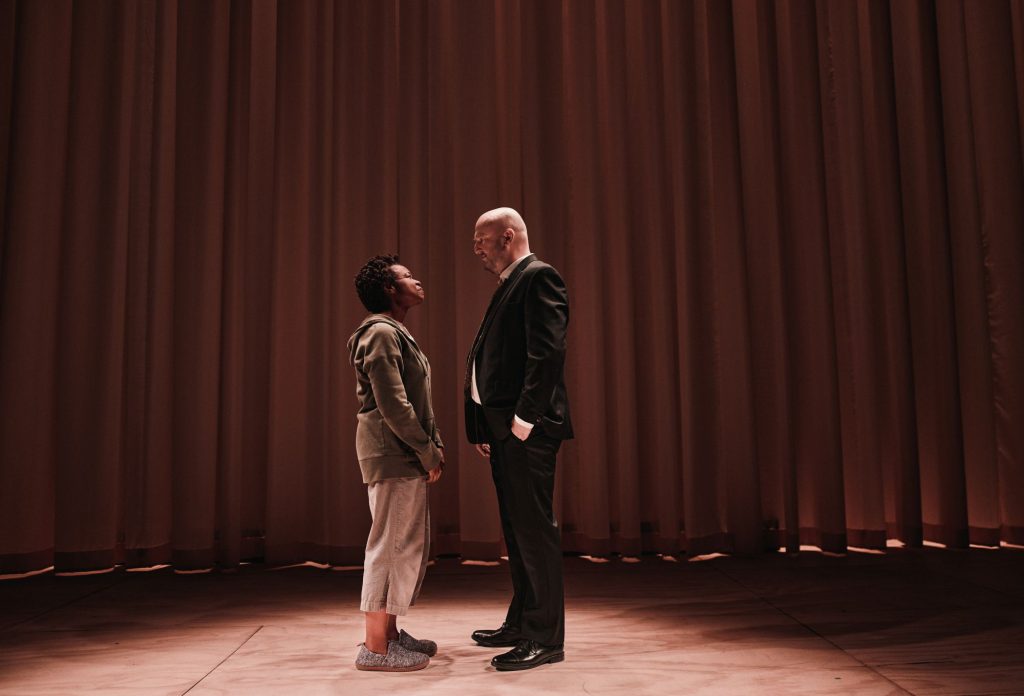
Weiler: Like Well, I’ll Let You Go, it’s about my hometown, Aurora, Illinois. It’s a much smaller play than Well, I’ll Let You Go. It actually takes place mostly within the Catholic parish that I grew up in. It’s about my experiences as an altar boy. I was beginning to grapple with my belief in God and questions of faith and fairness. It sat on a shelf for a really long time and, eventually, I had the idea to give the play to Jack, and he and I really tore it open. It is a completely new play now, I would say. It’s been so interesting to work on it because I am 33 and I wrote the play when I was 19 about my life as a 13-year-old. So it feels like saying hi to myself twice in this really beautiful way. What was 19-year-old Bubba going through that he needed to write this play? What had the 13-year-old Bubba experienced that he was trying to access and touch? It’s been a really moving and profound experience for me. Jack and I work super-collaboratively on the text. He is an amazing dramaturg and it’s a lot of back-and-forth about how to shape the plays, what should be said and unsaid. The other huge collaborators are the actors. Especially Well, I’ll Let You Go, we have actors who are completely allergic to bullshit. They let me know when it feels false, and then we tweak from there.
Serio: It’s a testament to the strength of Bubba’s writing that this many actors of this caliber are in Well, I’ll Let You Go, many of them just doing a 10- or 15-minute scene. So many moved heaven and earth to come and do the play a second time.
Weiler: I was actually going to say the opposite. It’s Jack’s work and reputation that got a lot of these actors in the door.
Snook: Now that you’re working in the not-for-profit theatre scene, would you go back to producing independently? Do you think there’s a way to navigate both worlds?
Weiler: As you may have guessed from Well, I’ll Let You Go, I’m a pretty sentimental person. I have such respect for the nonprofits. Having a show in the same theatre where Annie Baker had Infinite Life and Martin McDonagh had Hangman blows my mind. But like Jack, I’m excited by what’s come up in the cracks between the nonprofits, and I can’t wait to work more in that way, too, especially because it reminds me of how theatre was made in Chicago when I was coming up as an actor. People were just putting folding chairs in storefronts and calling them theatres. They packed 30 people into a crowded room to see a play that was this close to your face. That feels like home to me.
This interview has been edited for length and clarity.
—
TDF MEMBERS: Go here to browse our latest discounts for dance, theatre and concerts.