
I Am What I Am Because of ‘La Cage’

With the Encores! revival coming up, a longtime fan of the musical looks back on its personal impact
—
When New York City Center’s Encores! was founded in 1994, its purpose was to revive obscure shows whose scores deserved another hearing. As early as its third season, its mission started to shift with Chicago, hardly unknown but clearly worthy, borne out by the Broadway transfer of that production, which turns 30 this year.
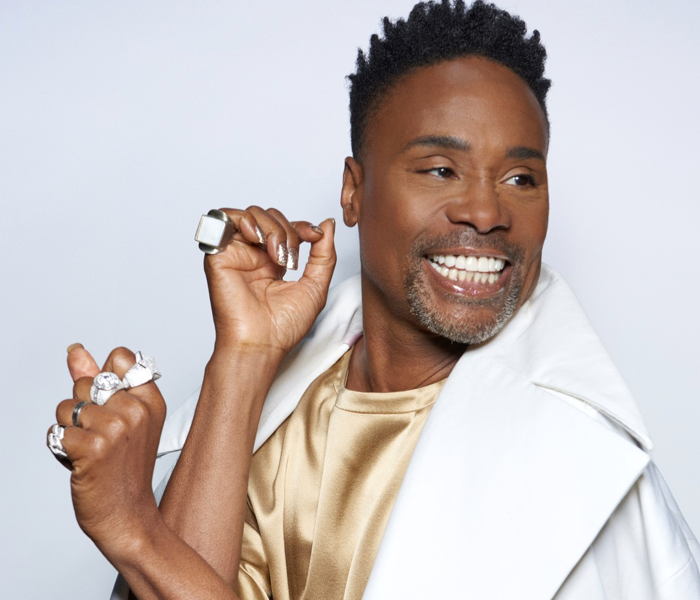
Recently, Encores! has become known for recontextualizing shows through nontraditional casting, such as The Light in the Piazza with Asian-American leads Ruthie Ann Miles and Anna Zavelson, and Wonderful Town with the Sherwood sisters played by Black actors Anika Noni Rose and Aisha Jackson. This month, La Cage aux Folles, the 1983 megahit that ran for four years and enjoyed two Broadway revivals, will assume a different aspect with an all-Black cast led by Billy Porter and Wayne Brady as the central couple, Albin and Georges.
Early on in my theatregoing experience, I learned how enlightening such an approach can be. On two occasions, I first made the acquaintance of a theatrical masterwork through such a casting choice: the Pearl Bailey company of Hello, Dolly! in the late 1960s; and a monumental production of Eugene O’Neill’s Long Day’s Journey Into Night in 1981 at The Public Theater starring Earle Hyman, Gloria Foster, Al Freeman Jr. and Peter Francis James. (I’m looking forward to seeing Mr. James in a featured role in the Encores! La Cage.)
Though elements of this reframing may differ from the originals, the result very often is a surprisingly resonant interaction with the text itself. Truth is truth, and the work transcends to reach us all. Hopefully a new generation of musical theatre lovers, including many people of color, will regard this production as a stepping stone to a broader perception of life’s possibilities, the way the original production was for me.
As with so many Encores! presentations, I will share my seat with earlier versions of myself. I don’t expect too much from the incarnations who attended the Broadway revivals in 2004 and 2010, but the me of 1983 experienced the original La Cage at a critical time. Little more than a decade of sexual liberation had passed before AIDS caused a significant backlash against gay men. I had only been out a few years, but before I could get my bearings within the community, uncertainty and fear became the stuff of daily life. Even so, I made a few tentative forays into the new paradigm, mostly through friends, and by having a three-month affair with a young Cuban émigré who never learned English and needed a Spanish-English dictionary to break up with me.
That fling brings me to another person I anticipate sharing my seat with at La Cage. His name was Gene, and I worked for him during my first three years at RCA. He was a dapper gentleman with an air that evoked Fred Astaire. He seemed a bit delicate, and old before his time. My first impression was that he was something of a cold fish, but ultimately I found him to be one of the warmest human beings, and greatest supervisors, I ever knew. He served as mentor, protector and—at least once—confidant.
I had been in my position about eight months when I met my Cuban, and I didn’t show up for work the next day until nearly noon. This was uncommon for me, and Gene expressed concern. Our interactions up to that point had been totally professional, though friendly. I wasn’t out at work, so I explained I had met “someone special” the night before and got carried away into the morning. He looked at me for a moment and, with a twinkle in his eye, said, “So, what’s his name?”
The ground shifting beneath my feet at that moment represented progress toward a surer footing going forward. There was an extra dimension to our relationship now. Gene occasionally shared details of what it was like growing up gay in New York City in the 1930s and ‘40s, and living a closeted life with his partner Maurice (pronounced Morris). He didn’t press me for details, but I got the sense he experienced vicarious satisfaction in watching my personal, as well as professional, growth. (He even accompanied me to Macy’s once to help pick out a set of dishes.)
In another part of the office building, RCA Red Seal was issuing classical and Broadway recordings. Eventually, I would work there, but in 1983 I was part of RCA Music Service, which operated various record clubs. Gene was in charge of classical music, less important overall to the main club, but very important to Red Seal, which treated him with respect. Occasionally, he would be invited to events related to Red Seal projects. One was La Cage aux Folles, in which RCA was heavily invested. Indeed, unusual for a Broadway musical, the original cast album was recorded between the Boston tryout and the start of previews in New York so the LP could be released by the official opening night.
I would like to think Gene took Maurice, though I don’t remember if he did. Neither do I recall any discussions about what the show may have represented to him on a personal level. When it came time to write the blurb for it in the club catalog, I asked him for song titles to feature, and one he insisted I include was “Song on the Sand.”
Ask any musical theatre aficionado about great Jerry Herman songs, and showstoppers like “Hello, Dolly!” and “Mame” inevitably come first. The equivalent song in La Cage is “The Best of Times” from the second act. Even more iconic, especially to the LGBTQ community, is the electrifying number sung by Albin that closes Act I: “I Am What I Am.”
But for me, the heart of Jerry Herman is in his ballads: “It Only Takes a Moment” and “Ribbons Down My Back” from Hello, Dolly!; “If He Walked Into My Life” from Mame; “Time Heals Everything” from Mack & Mabel. In La Cage, Albin may have flashier numbers, but Georges gets two wonderful ballads, one of which is “Song on the Sand.” In it, he reminisces with Albin about the long-ago day they met and walked along the beach, while “a fellow with a concertina sang” a song whose lyrics Georges can barely remember, but whose melody transports him back to that time, making him feel “young and in love.”
Months after Gene saw La Cage, I finally was able to buy a seat in the upper balcony to see what all the fuss was about. In its presentation of the outrageous yet utterly normal life that two men could share, I saw a possible way forward that differed from the direction I thought was inevitable for me. And I suddenly realized what Gene was telling me when he demanded I include “Song on the Sand” in the catalog blurb.
Truth was truth, and the work transcended to reach us all – gay, straight, male, female, young, old. A musical about a gay couple was actually for all of us.
Even after I saw the show, I didn’t yet have the insight for a meaningful conversation with Gene about it. Within a year, he died, age 62. Though we only knew each other for three years, I still sense his influence, even now having outlived him by nearly a decade. I suspect when Wayne Brady performs “Song on the Sand,” I will turn, Janus-like, to one side and gaze upon my husband of 12 years, and to the other to smile at a ghost with a twinkle in his eye, congratulating me on a job well done.
—
TDF MEMBERS: Go here to browse our latest discounts for dance, theatre and concerts.