
Why ‘Becky Shaw’ Sparks Laughs and Arguments

Two-time Pulitzer finalist Gina Gionfriddo makes her Broadway with a revival of her 2008 dark comedy
—
When talking about what audiences will think of Second Stage’s revival of her 2008 dark comedy Becky Shaw, Gina Gionfriddo sounds as apprehensive as someone prepping for a blind date. That’s appropriate since the Pulitzer finalist play is about a setup that goes hilariously, painfully wrong. “I certainly have some anxiety about how the play will be received all these years later in this particular cultural moment,” admits Gionfriddo. “All of my playwriting influences were writers like Nicky Silver and Christopher Durang who mined comedy from cruelty, which I don’t see very much in new plays. I do wonder whether people will feel comfortable laughing.”
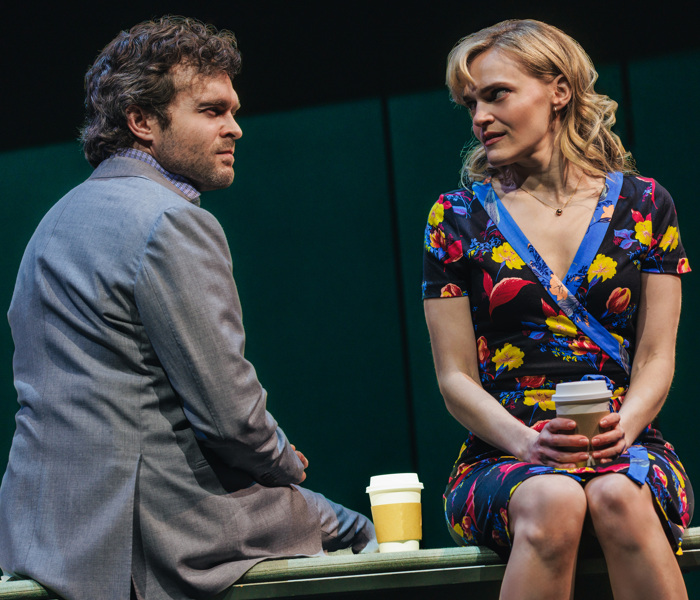
Yet there’s plenty to laugh at—and argue over—in Becky Shaw, which marks Gionfriddo’s overdue Broadway debut and runs at the Hayes Theater through June 14. Two newlyweds, empathetic Andrew (The Pitt heartthrob Patrick Ball) and acerbic Suzanna (Tony winner Lauren Patten), invite her tactless pseudo-sibling Max (Alden Ehrenreich) and Andrew’s fragile coworker Becky (Madeline Brewer from The Handmaid’s Tale) on a double date. But issues with Suzanna’s mom (Linda Emond) prevent them from going, so Max and Becky strike out on their own. The fallout from that evening reframes all their relationships.
“In 2008, online dating wasn’t yet a thing, so the stakes for Becky on this blind date are much higher than if she were living in the era of ‘swipe left or right,'” says the director, Trip Cullman. “Also, the play predates #MeToo and the social reckoning of 2020. The blunt frankness, the open cruelty of the way these characters speak to each other will be unfamiliar to a contemporary audience who have been culturally conditioned to be much more careful and polite in the way they communicate. Language as a cudgel will either be bracingly refreshing, or folks will wince through the entire show. Cringe comedy is my favorite form of laughter, though, so this production has really leaned into that.”
After a few well-received plays, including a 2008 production of U.S. Drag directed by Cullman, Gionfriddo scored her first big hit with Becky Shaw, which started out at the Humana Festival of New American Plays at the Actors Theatre of Louisville and arrived Off Broadway courtesy of Second Stage. The show racked up raves and accolades and was shortlisted for the Pulitzer, as was her next play, Rapture, Blister, Burn, which premiered at Playwrights Horizons in 2012. Yet despite her success, Broadway remained elusive and TV was calling. For a little over a decade, Gionfriddo made her living as a writer and producer for House of Cards and various incarnations of Law & Order. “I had a child on my own, so I couldn’t do the starving artist thing anymore,” she says. “But theatre is really my first love.”
That’s why she’s semi-thankful for the downturn in TV—it gave her time to adapt The Silence of the Lambs for the stage in the UK and to write two brand-new plays, which she’s shopping around. “One is a dark comedy about wokeness weaponized, and to blurb the other in a way that will make no one want to see it, it’s about female friendship born of alcohol and trauma,” she says wryly.
Less TV work also meant Gionfriddo was available to be “very involved” with this production of Becky Shaw. “I was surprised, but I had approval in casting and I’ve been in rehearsals,” she says. “I have a long relationship with Trip, so he trusts me and respects my opinion. He knows I’m not going to be a destructive presence.”
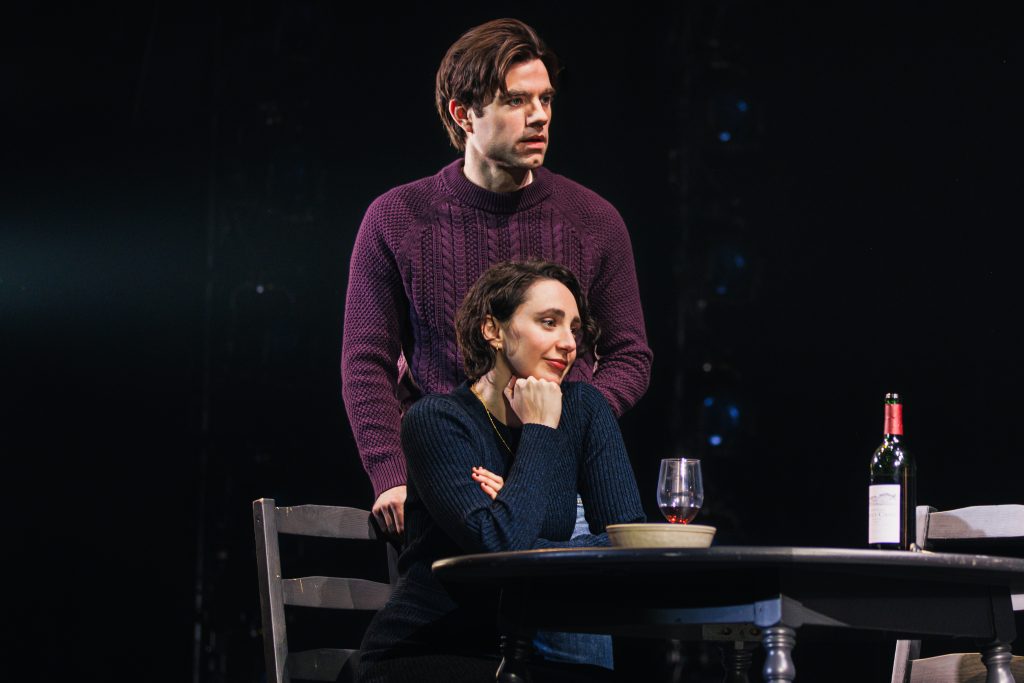
While she acknowledges that she “tweaked some stuff” she worried would land so differently today audiences might tune out, by and large Becky Shaw—a sly nod to Vanity Fair social climber Becky Sharp—is the same searing play it was two decades ago. And, just like last time, it continues to provoke passionate debates about who’s to blame for the blowup. Max is mean, but is he also lovesick? Becky is manipulative, but is she just looking to get back to, as she puts it, “her good self”? And do Andrew and Suzanna improve or impair each other?
“I think that’s one of the major things I was interrogating with the play: Do you want to be with the person who feels kin to you and shares your worst qualities? Or do you want to try to marry up morally and get with someone who will make you better?” explains Gionfriddo, adding that heated talkbacks after the original production were “a litmus test for what audience members valued.”
Cullman recalls seeing Becky Shaw in 2008 and thinking, “I hope I get a chance to direct this play one day. It was so brutally funny, so surprisingly deep, so fearless. Gina is one of the smartest, wittiest and bravest writers I know.”
Gionfriddo, now in her mid-fifties, says she’s thankful she started back when new play incubators like the Humana Festival and The Lark, both defunct, were encouraging dramatists to be bold. “I talk to my playwriting peers all the time about how incredibly lucky we are that we came up when we did,” she says. “It was hard, but it was a hell of a lot easier than now. When the end of Humana was announced, I felt like I wanted to take to my bed and never get out. I don’t know if I would have a career without Humana, they premiered two of my plays.”
When asked what emerging playwrights need right now, Gionfriddo is as blunt as Max: “Money. It’s always about that. If commissions could be larger, if we could pay playwrights to sit and write, that would be amazing.”
—
Becky Shaw is frequently available at our TKTS Discount Booths.
TDF MEMBERS: Go here to browse our latest discounts for dance, theatre and concerts.