
Why Clifford Odets’ Plays Continue to Sing 90 Years On

Why revivals of Awake and Sing! and Waiting for Lefty feel particularly timely
—
Even though it’s been nearly a century since Clifford Odets blazed his way into the pantheon of great American playwrights by exploring the class strife of the Great Depression, his searing work continues to resonate. With inflation, income inequality and underemployment putting the American Dream ever more out of reach, it’s fitting that two NYC theatre companies are staging a pair of Odets’ politically charged plays from 1935: the agitprop Waiting for Lefty, running at Classic Stage Company through November 22; and the immigrant family drama Awake and Sing!, which begins performances at Manhattan Theatre Club’s Samuel J. Friedman Theatre on Broadway on December 15.
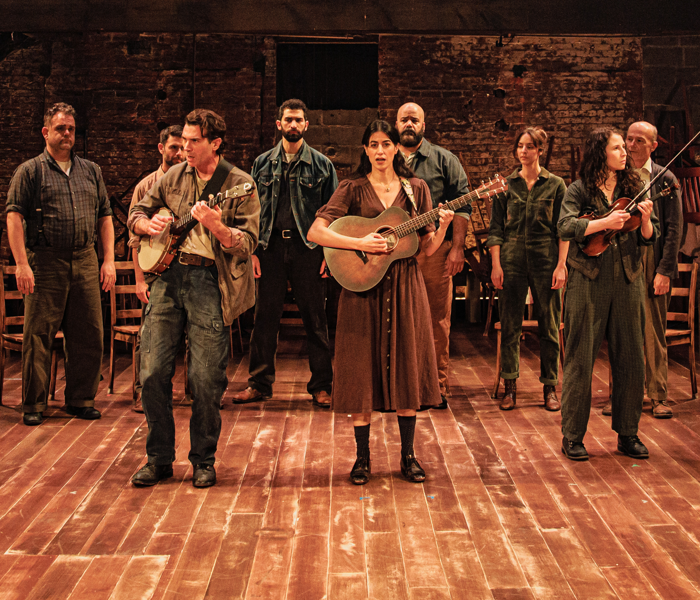
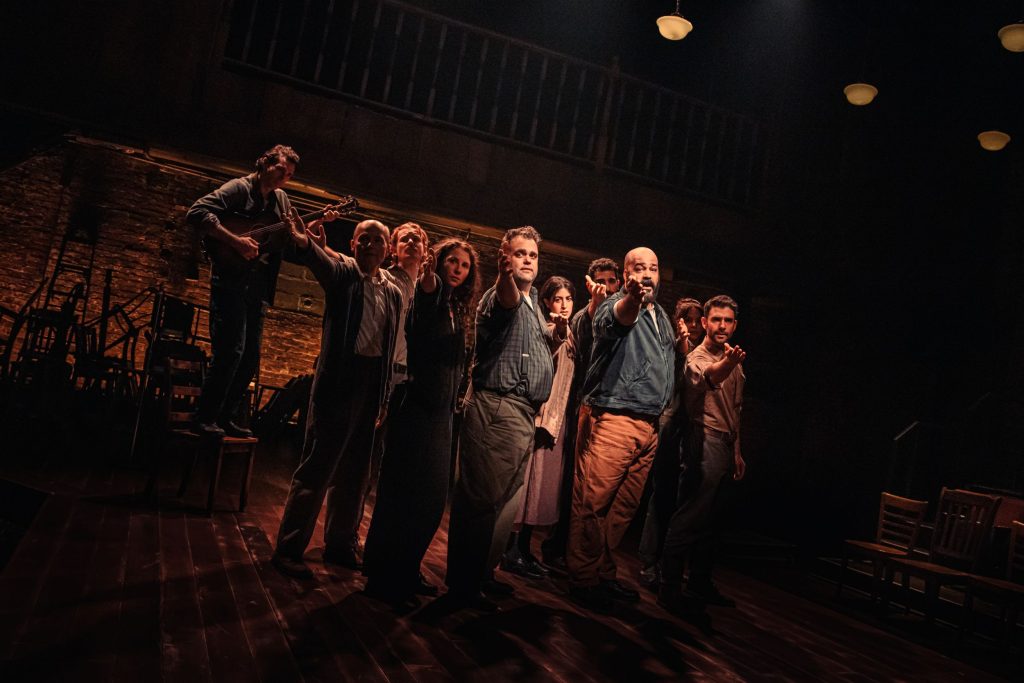
“We are asking the same questions Odets was asking then, that’s why we are having this moment,” says Steven Pasquale, the celebrated stage actor who’s making his directorial debut with Waiting for Lefty. The play takes place primarily at a union meeting, where NYC taxi drivers are poised to strike for higher wages. During the heated session, these blue-collar workers talk about “corruption, radical levels of inequality and how people can have not just bread but roses, too—the same things that are vital today,” says Pasquale.
Director Tyne Rafaeli, who’s making her Broadway debut with Awake and Sing! about a multigenerational Jewish family trying to get by in the Bronx, agrees. “We find ourselves at a similar inflection point in this 21st century moment, where the chasm between rich and poor feels almost unfathomable,” she says. “The generational tensions, the political engagement about how to recalibrate the world order, is more acute than ever.”
An actor turned playwright, Odets became an overnight celebrity in January 1935 when his one-act call to arms Waiting for Lefty electrified the audience at downtown’s Fourteenth Street Theatre. A month later, his first full-length play, Awake and Sing!, opened on Broadway. By the end of that year, the 29-year-old playwright had four shows on Broadway and was hailed as a new revolutionary voice in the theatre. Considered a successor to Eugene O’Neill, he went on to inspire Arthur Miller, Neil Simon, even David Mamet.
“Odets is one of the most influential playwrights in American history,” says Nicki Hunter, the artistic director of Manhattan Theatre Club. “When the likes of Arthur Miller are looking to Odets, obviously attention must be paid.”
For Pasquale’s Waiting for Lefty, the director is “asking the audience to transport themselves into this high-stakes union hall in 1935,” he explains. “We’ve got to remember these people could be killed for speaking out, which is also the case now. I am interested in the life-and-death danger of it all. It feels really important in terms of the storytelling community to be pushing back and throwing punches. The only check that we can have against a rabid, corrupt oligarchy is a labor force.”
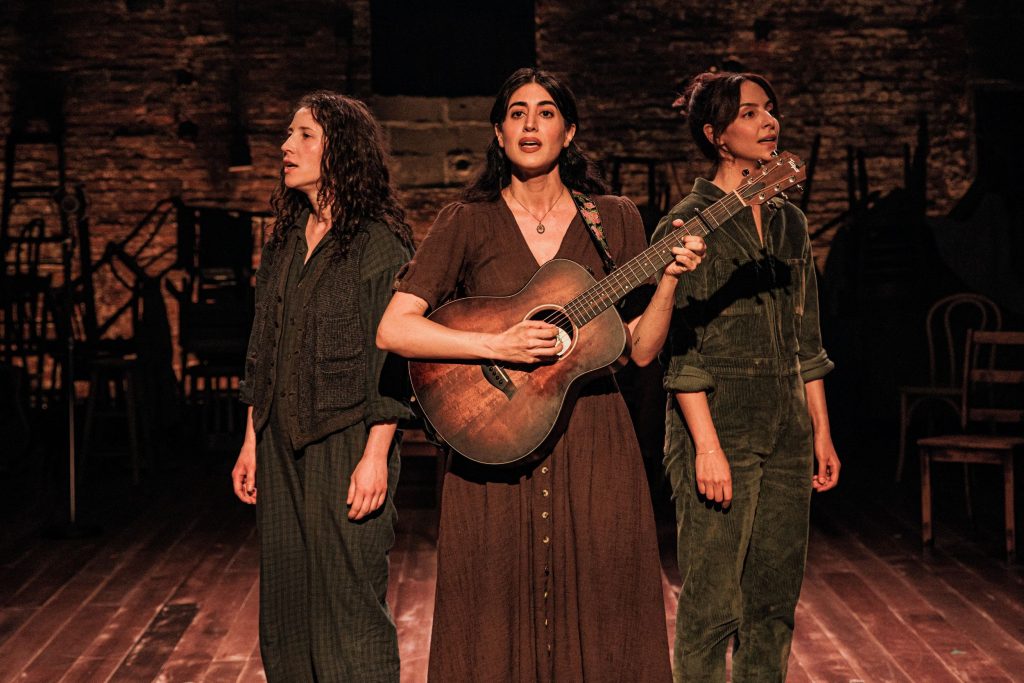
Structured as a series of vignettes that interweave vivid snapshots of the cabbies’ lives into the meeting, Waiting for Lefty has been significantly expanded by Pasquale with the addition of music and movement that transform the production into a “multidisciplinary evening that is Brechtian in nature, that celebrates the Odets of it all.” He commissioned a score from Yeller Tooth, aka Cameron Scoggins and Sahar Milani, a husband-and-wife folk duo who perform in the show. “It’s music you can imagine people playing around a trash-can fire, not just in 1934, but in the late 1800s or in 1971—something that’s got a real Americana vibe to it,” he says.
Mainly about Italian, Irish, German and Jewish immigrants, the play, which was inspired by a real 1934 taxi strike, originally featured a cast of 20. But Pasquale is “doing it with ten incredible shape-shifting performers,” including English Tony nominee Tala Ashe, her real-life husband Raffi Barsoumian, and Broadway vets Austin Durant, Greg Hildreth, Adam Kantor and Henry Stram. “So it’s a real kind of Brechtian political theatre, handmade, bespoke. It’s going to be really fun to just try all these hats on a contemporary group of storytellers.”
Odets pivoted from workplace to home with Awake and Sing!, which takes place in the Berger family’s crowded Bronx tenement. Under the watchful eye of matriarch Bessie, three generations of Jewish Americans struggle to navigate their lives, loves, hopes and aspirations during the Great Depression. “It’s about a working-class immigrant family trying to survive without a social safety net,” says Rafaeli. “The moral, economic and political collapse in the mid-1930s is woven into Awake and Sing!, even if it isn’t as explicitly addressed as it is in Waiting for Lefty. You really can’t separate the personal and the political in Odets.”
Over the decades, Awake and Sing! has proven its universality and resilience—in addition to the Mark Ruffalo-led Broadway mounting, which won the 2006 Tony Award for Best Revival, NAATCO’s all-Asian revival earned a 2014 Obie Award. Yet for the Manhattan Theatre Club production, Rafaeli wanted an all-Jewish cast. “We invited and prioritized seeing Jewish actors for this play,” says Rafaeli, who is Jewish and grew up in London. When the show premiered on Broadway, she notes, it marked the first time that Jewish Americans were portrayed as “fully formed—complex, flawed, contradictory, hopeful, lustful, hypocritical—all of the things that human beings are.” Prior to that, she says, Jewish characters had been relegated to “schlocky two-dimensional stereotypes.”
With her cast (Danny Burstein, Micaela Diamond, Jessica Hecht, Will Pullen and Jeremy Shamos have been announced so far), Rafaeli is hoping to create something akin to the bond that was shared by members of the Group Theatre, Odets’ spiritual and professional home during the first decade of his career.
“They knew each other so well, and you can hear that in Odets’ writing,” Rafaeli says. “They finish each other’s sentences, they speak fast, overlapping, changing subjects.” She suspects that for those Group Theatre actors who had “been with each other for years, living together, eating together,” creating a family onstage was easy because they were essentially one offstage as well. “Every member of my cast has a different relationship to their Jewish identity, but there is a foundation there that I think is going to parallel the intimacy that the members of the Group Theatre had,” she explains. “Of course, this is a complicated time to be Jewish in the world. So to have a room with smart, brilliant people who are thinking deeply about this is going to be an enormously enriching experience for us all.”
Rafaeli’s relationship to Odets goes back to her first job after graduating with an MFA from Columbia University, when she assisted director Bartlett Sher on his 2012 Broadway revival of the playwright’s boxing drama Golden Boy. While working on that production, she discovered a trove of Odets material at Lincoln Center’s New York Public Library for the Performing Arts. She returned to that archive to prep for Awake and Sing! and made a fascinating discovery.
“There are about five drafts of what is now Awake and Sing!,” Rafaeli reports. While each version was significantly different, there was one constant from the very first iteration, titled I Got the Blues, to the penultimate draft: lots of Yiddish. But those words were excised from the final script. “I know from Odets’ writings and journals that he was under a certain level of pressure to make the play producible,” she says, speculating about why he made the edits. “So now there is this opportunity with our 21st century lens to highlight certain things about the Jewish American experience that I’m not sure they were allowed to do in the mid-1930s.” Rafaeli is currently in conversation with the Odets estate to reinstate some of the Yiddish back into the play. (Considering New Yiddish Rep did a downtown mounting of the play in the Judeo-German tongue in 2017, there is a kind of precedent.)
Both Pasquale and Rafaeli marvel at Odets’ inimitable voice, or as Arthur Miller put it in his memoir: “For the very first time in America, language itself had marked a playwright as unique.”
“He took this language of the street and turned it into sort of the song of America,” Pasquale says. “Odets to me, along with Miller, is American Shakespeare.”
Rafaeli admires how the family in Awake and Sing! seems to speak almost in a secret code. “There is such a working-class Jewish vernacular that is so idiosyncratic and singular that it is elevated to poetry,” she says. “I think this is why Odets is so essential for our time. These characters are genuinely wrestling with how to protect their souls—I don’t mean that on a religious level but on a human level of how to live and feel better.”
And his work isn’t just speaking to American audiences. Over in London, the West End revival of Odets’ Golden Boy starring Josh O’Connor is such a hit, it will screen in cinemas next month.
“I really want it to feel like a balm in this moment, where the rage that we feel when we read the newspaper every day feels a little bit uncontrollable,” says Pasquale about his hope for Waiting for Lefty. “I want the experience of seeing this play and talking about it to feel like medicine for our weary citizen souls.”
—
TDF MEMBERS: At press time, discount tickets were available for Waiting for Lefty. Log in to browse our latest discounts for theatre, dance and music.