
A Second Chance to Collaborate for Amalia Yoo and Eliya Smith

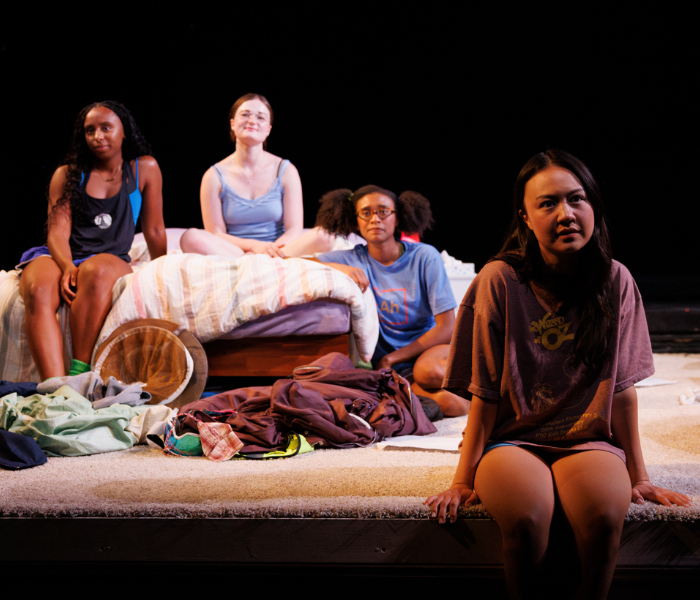
After their first show ended abruptly, the acclaimed playwright and actor are thankful for a do-over with Dad Don’t Read This
—
In early 2025, playwright Eliya Smith and performer Amalia Yoo were thrilled about making their respective Off-Broadway debuts with Grief Camp at Atlantic Theater Company. Then a strike by backstage workers closed the production after just two previews. Eventually, the show did go on, but without Yoo since she was doing John Proctor Is the Villain on Broadway. Yet during the six weeks Smith and Yoo collaborated, they formed a deep bond—the playwright even ended up making rewrites to Grief Camp based on the actor’s feedback.
So when Smith approached her about starring in her new play Dad Don’t Read This, Yoo leapt at a second chance to work together, even though it meant going from Broadway to the church basement of St. Luke’s Theatre. After earning rave reviews this spring, the production has transferred to the Greenwich House Theater through July 18.
An incredibly raw and disturbingly authentic portrait of the messiness of adolescence, Dad Don’t Read This depicts a series of increasingly fraught sleepovers as Mal (Amalia Yoo) hosts three of her gal pals (Renée-Nicole Powell, Sophie Rossman and Kayta Thomas) in her basement bedroom in suburban Ohio. These teens may not be mean girls but they’re not sweethearts, either. They laugh, gossip, dance and play the video game The Sims, eager to inhabit a simulated world they can control. But back in reality they struggle with their emotions and lash out at one another to inflict maximum damage in the way only close confidants can.
It’s ironic that the secret to conjuring such dysfunctional friends onstage is a behind-the-scenes partnership built on mutual admiration and trust between Smith and her creative collaborators, particularly Yoo. Both in their twenties, the two artists have a palpable connection, which they cheekily say is based on shared “panic disorders” and “being on an SSRI.” TDF Stages chatted with Smith and Yoo about embracing unlikable characters, the power of the teenage perspective and the “magic” of running at “a similar frequency.”
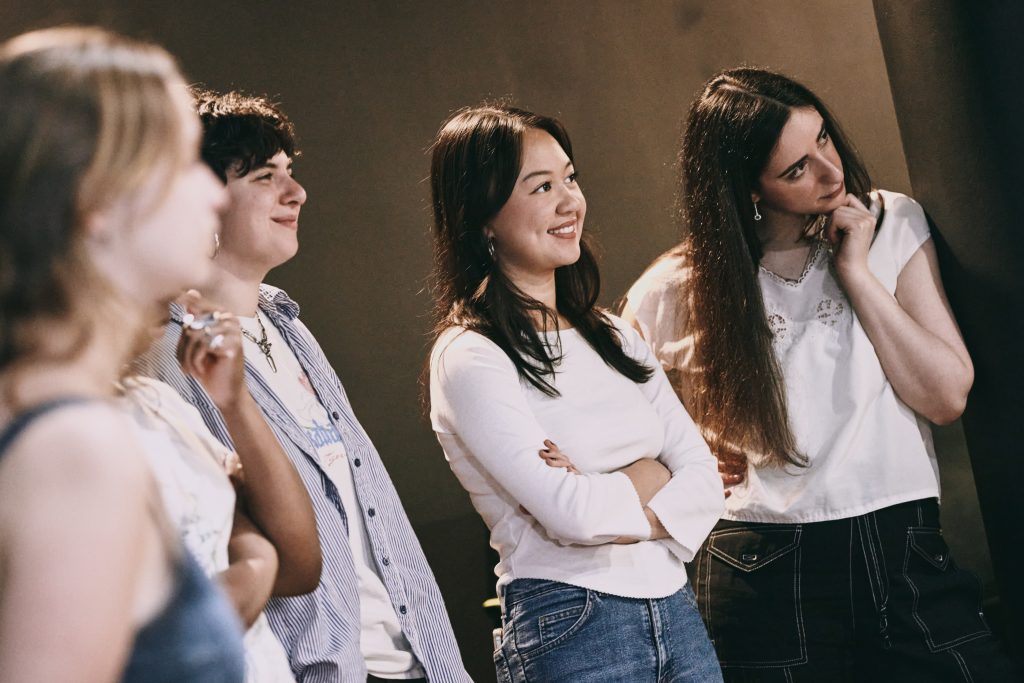
Sarah Rebell: How did you two meet?
Amalia Yoo: In the audition room for Grief Camp. The play was one of the best things I’d ever read. The writing was so beautiful.
Eliya Smith: At one point in her audition, Amalia was eating a gummy worm and then she smoked it like a cigar. I thought it was genius.
Yoo: I was terrified on the first day of Grief Camp rehearsals, trying not to do the wrong thing, trying to keep the job.
Smith: We were so nervous and inexperienced. I would imagine that we have both grown quite a bit since the first day of Grief Camp.
Yoo: There’s nothing like doing a play to bring people together. And we got really close.
Rebell: How did your reunion on Dad Don’t Read This come about?
Yoo: I was hoping and praying that I would get to say Eliya’s words again, but never in my life did I think it was going to be so soon after Grief Camp. Eliya said, “I have this play. You can say no. You might be too busy.” And I was like, “There is nothing I would want to do more.”
Smith: Amalia had just had this extremely high visibility moment in John Proctor, and everybody was rightfully obsessed with her. It speaks so well of Amalia that she really did not care if there was anybody fancy involved in any way with Dad Don’t Read This; she just was down to do it.
Yoo: This script verbalizes so many feelings that I felt but had been unable to express—concrete ideas and reflections living in my body from having been a teenage girl.
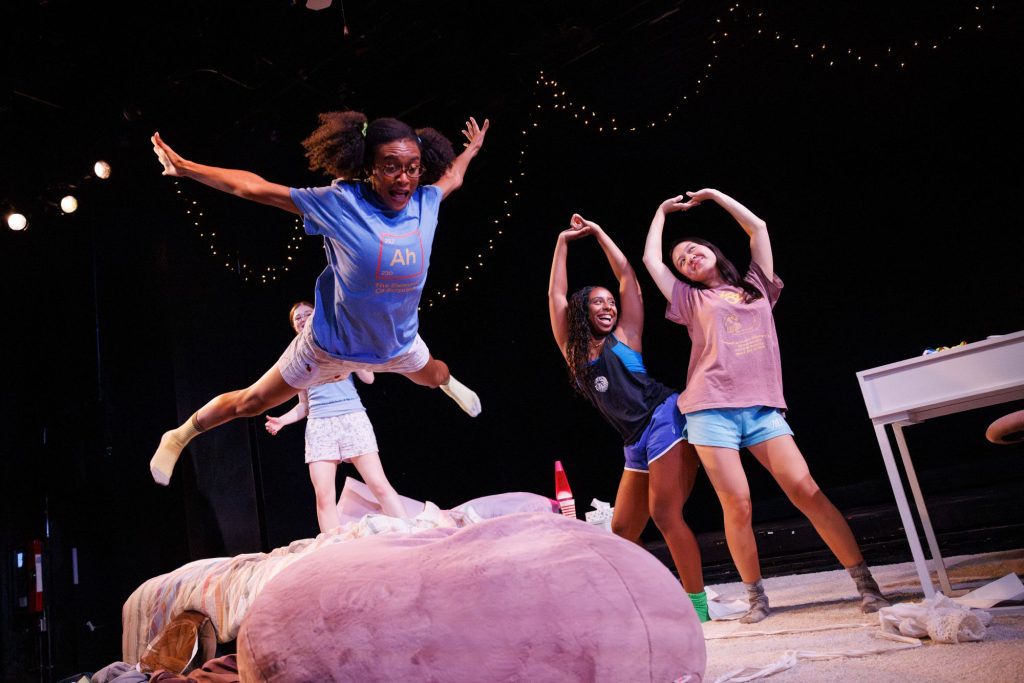
Rebell: Have you made any changes to the production for its encore engagement at Greenwich House Theater?
Smith: There are many things that we’re extremely conscious of shifting to make sure that they work in this theatre for this audience, but it also is the same play that we are just doing for each other.
Yoo: When we first saw what the new set looks like, I joked that it reminded me of when I was in high school. I would rearrange my room once every two weeks, and that’s what this is—Mal has rearranged her room! You are invited back to see the show again, because there have been some changes and you need to see them, because they’re important to her.
Rebell: How much input did the actors have in the play’s development?
Smith: I always change my scripts a lot to fit the actors. We spent a lot of time talking about the characters and the relationship dynamics and that impacted the play in a huge way. It’s really helpful to be able to figure out exactly what needs to be said and what doesn’t need to be said in a character-forward play.
Yoo: The amazing thing about doing a world premiere is that there’s no blueprint, so you get to traverse the new landscape of understanding who this person is. Eliya is so collaborative, as is Chloe [Claudel, the director]. Before we started rehearsals, Chloe sent us a really beautiful email that said: “Eliya and I want you to take full ownership of these people. These characters are you now.”
Smith: We tailored the entire production around each of these performers. We were joking earlier about what it would be like if we recast each of them in different parts. We were saying how completely wrong anybody would be in any of the other parts, despite them all being the best actors ever. That must be a good sign that the cast is fit to the parts.
Rebell: That’s a loaded compliment considering Mal could be perceived as unlikable or troubled. For a friend to say, “Here’s this new play I wrote, I have this part in mind for you…”
Yoo: I’m obsessed with the fact that Eliya wrote this character who’s defined by being annoying, and she thought, Amalia is perfect for the role!
Smith: Obviously, Amalia’s not annoying. From the beginning of Grief Camp, I could hear Amalia’s voice so potently. With Dad Don‘t Read This, I remember lying in bed, thinking about my life and suddenly realizing Amalia needed to be Mal.
Yoo: I feel really lucky to get to play a character who doesn’t do the perfect thing all the time. I think that would be boring to watch. Eliya has written this person at a really raw, scary, vulnerable time in their life. People see that and feel for Mal. They hate the things that she’s saying and doing, but they also root for her.
Smith: Amalia has always been so warm and bubbly, and also pretty fearless. Even in Grief Camp rehearsals, she was like, “I will try anything.”
Yoo: On stage is probably the only place where I will throw anything at the wall and see if it sticks. I am not like that in real life. I’d never really done direct address before. I’m way more comfortable talking to audience members now. This show is very much like, “Welcome to my play. I’m talking to you.”
Smith: That’s such a great example of you being brave in a rehearsal room.
Yoo: It feels like we’re tearing ourselves open in this play. I hate having to yell and be mean, but we have the freedom to go there with each other because we know that in real life we all love and trust each other so much.
Smith: You’re watching this character and you want her to stop messing up. But she’s 16. She actually can’t stop, and I find that really exciting. This character loves her friends so much and cannot seem to live in a world where she expresses that. I constantly wonder, “What if I made these characters more likable?” But that doesn’t do justice to the experience that I’m trying to represent. When you’re that age, you are drowning and trying so hard to keep your head above water. It’s very rich to me as a writer.
Rebell: Amalia, you began working on this show shortly after finishing John Proctor Is the Villain, another play about teenage girls trying to navigate a world that’s often hostile to them. Why do you think it’s important to tell stories from this perspective?
Amalia: The experiences we have as teenagers shape our worldview. That’s when you’re figuring out who you are as a person. I think the pressure on teenage girls to be perfect has always been there. Adults who have come to see the play have told me, “This reminds me of me in high school; this reminds me of my friends.”
Smith: My Granny said it reminded her of sleepovers she had. I said, “Oh, Granny, I hope you guys weren’t speaking to each other that way.”
Yoo: I think people love seeing teenage stories because they’re like, “I went through this, and that’s why I am the person I am now.”
Smith: I find it exciting to write for young voices.You have a full palette available to you when you’re writing for young people, because they have no idea what they’re doing. The inarticulacy of young people, the intensity of their feelings—I think it’s very moving. They can’t vote, but they’re the future. I actually think putting young people onstage and interrogating their experiences prevents them from becoming bitter adults who take out their sadness and hurt by making the world worse.
Yoo: There’s a brutality of youth and a certain level of stakes when you’re 16 that is really artistically interesting. People ask me, “How do you feel about always playing teenagers?” I’m like, “I’ll do it as long as I’m believable as a teenager.”
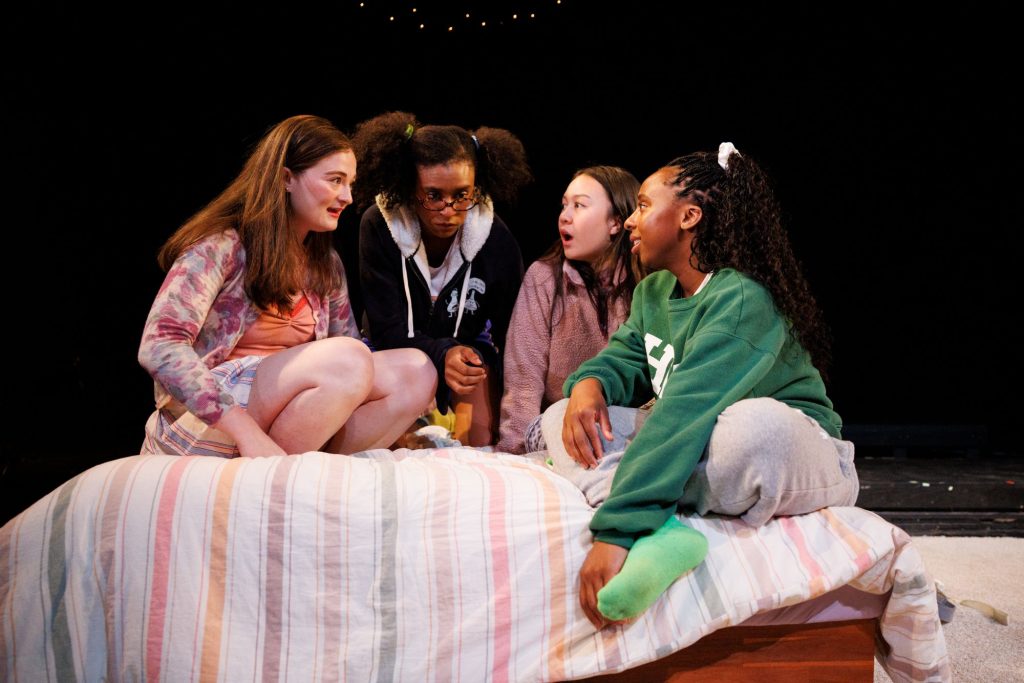
Rebell: Eliya, you graduated with an MFA in playwrighting from the University of Texas at Austin last year. Yet you’ve already built up a network of artists you frequently work with, including Amalia, Renée-Nicole Powell and director Chloe Claudel, all involved in Dad Don’t Read This.
Smith: The hardest and also the best thing about theatre is that it’s just not complete on the page. It is essential to have collaborators who understand what you’re going for and who will do things that you didn’t anticipate. It means that you can take risks and make things weird. This production is the perfect embodiment of what I wrote, but there are many things in it that I would never have thought of. I really believe in clinging to people who are artistic fits. Even as I’m saying this it feels conceited for me to say that you’re a good fit for my writing.
Yoo: I think it’s true!
Smith: You are a good fit for any writing because you’re such a good actor, but I do think that there is a particular kismet. We run at a similar frequency.
Yoo: The theatre language we speak is aligned. Also, there’s a huge amount of trust with us—and with this whole cast—that was innate from the second we started our rehearsal process. As actors, we trust any cut Eliya makes. It might feel crazy at the time, but soon we can’t imagine it being anything other than how it is now. I don’t even know if that’s something that you can create. It comes from a magical, fated place.
This interview has been edited for length and clarity.
—
TDF MEMBERS: At press time, discount tickets were available for Dad Don’t Read This. Log in to purchase and to browse our latest offers.