
Why This “Radically Reimagined Revival” of a Wendy Wasserstein Play Was 30 Years in the Making

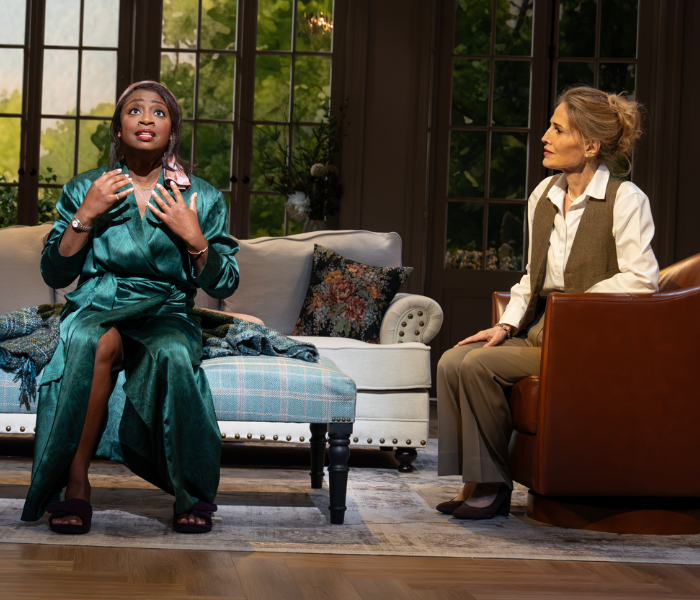
How a new production of An American Daughter speaks to our past and our present
—
When asked what inspired her to mount the first major NYC revival of Wendy Wasserstein’s An American Daughter, producer and star Jean Lichty is blunt: “The defeats of Hillary and Kamala.” While there are better known and more beloved Wasserstein works—the Pulitzer Prize-winning The Heidi Chronicles and Uncommon Women and Others come to mind—Lichty believes An American Daughter, largely dismissed three decades ago by critics during its Broadway run at Lincoln Center Theater, speaks uncannily to this moment.
Packed with Wasserstein’s biting wit and wisdom, the story centers on Dr. Lyssa Dent Hughes (Lichty), a progressive and accomplished physician and mother, who is a descendent of Ulysses S. Grant and the daughter of a conservative but doting US Senator. She looks like a shoo-in to be the next Surgeon General until a missed jury duty summons and a flippant remark about homemakers ignite a media backlash. Meanwhile, her closest friends and family face their own crises, including infertility, infidelity, depression and the nagging sense that something is rotten with the state of the nation.
Wasserstein seemed to share that same unsettled feeling about the play, which she rewrote many times between 1996, when it premiered at Seattle Repertory Theatre (starring Meryl Streep, Julianne Moore and Liev Schreiber!) and her untimely death 10 years later. In fact, Lichty and her collaborators discovered there were eight different versions of the script, including the TV movie adaptation starring Christine Lahti, which was rechristened Trial by Media. According to Lichty and director Sarna Lapine, the iteration running Off Broadway at The Pershing Square Signature Center through September 20, which incorporates elements from multiple renditions, has never been seen before.
It was André Bishop, the longtime artistic director of Lincoln Center Theater and a champion of Wasserstein’s work, who helped Lichty and Sarna convince the playwright’s estate to let them weave elements from different drafts together. “I have a long personal relationship with André, and we have worked closely with him and made certain changes and edits to the script along the way,” says Lapine, niece of the legendary writer and director James Lapine, one of Wasserstein’s closest friends. “I like to call it a radically reimagined revival. Anytime I’ve requested to try something, André has said to me, ‘Wendy would always say yes, always try it.’ It has been a really beautiful experience to have him involved in this conversation. There are changes in both the first and second acts that we think make this Wendy’s strongest version for the moment without rewriting her work. It’s more of a combing through all the versions she’s done.”
Bishop has been happy to help. “Wendy Waserstein often revised her plays,” he recalls. “She was a ferociously hard worker, and she wanted to get things right. She had very strong feelings about An American Daughter—surely her most political play—and she rewrote and revised parts of it after its premiere in New York… Wendy was not afraid of change; she often welcomed it. And so, on this play, does her literary estate.”
Although other productions have opted to set the play in the present day, Lapine believes keeping it a period piece actually reveals that its observations—about the tension between different generations of feminists, the impossible choices of working women and our society’s inherent sexism, along with the rise of identity politics and toxic media—were perceptive and predictive. “Jean and I both were really keen to make this resonate with the moment,” Lapine says, “But we thought leaving it set in 1997, which was post-Nannygate but pre-Monica Lewinsky, was appropriate.”
This production originated last year with a reading by Litchy’s company, La Femme Theatre Productions. While she liked the play overall, she was unhappy with the ending, which centered Lyssa’s troubled marriage as opposed to her relationship with her lifelong best friend, Dr. Judith Kaufman, a Black Jewish oncologist who’s in the throes of a midlife crisis that includes (spoiler alert!) last-chance fertility treatments and a suicide attempt. A friend suggested Lichty contact Ina Marlowe, who had directed the play in Chicago in 1997 with a different, female-forward finale. Once Lichty read that script, she knew she wanted to do a full-fledged mounting.
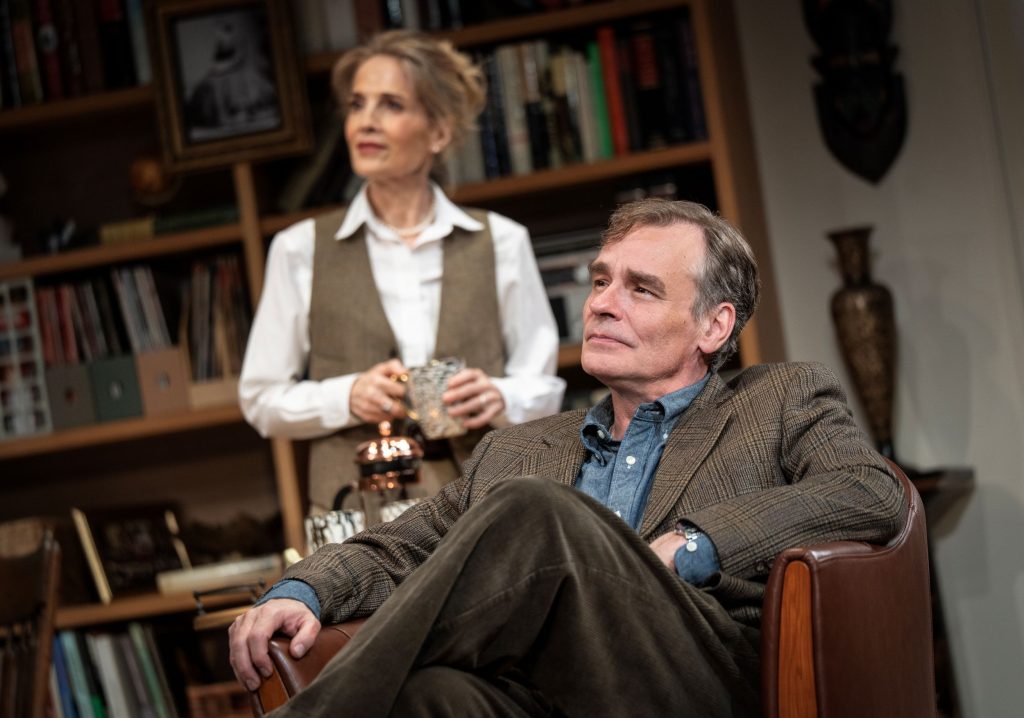
The chance to do this seldom-seen Wasserstein play certainly attracted a top-notch design team and some very talented actors. The cast includes Tony-winning stage and screen star Robert Sean Leonard as Lyssa’s husband, Walter, an insecure academic; Tony nominee Montego Glover as her intersectional BFF; Ryan Spahn as a gay conservative with a big mouth; Dakin Matthews as Lyssa’s senator dad; and Tony nominee Mary Beth Peil as Lyssa’s amusingly daffy new stepmom, Chubby, who gets some of the plays most hilarious lines, including: “How can anyone be depressed when there are so many wonderful cheeses in the world?”
In his reductive 1997 New York Times review of the Broadway production, Ben Brantley called Lyssa “a poster for Ms. Wasserstein’s feelings about a country that continues to thwart its best and brightest women.” Sadly, that epidemic has only intensified, especially over the last decade, making An American Daughter feel downright prophetic.
“What’s prescient about Wendy’s play is we’re seeing the perilous results of having ignored her, of having dismissed how much a piece like this mattered then and matters now,” says Lapine. “There is a line directly out of Lyssa’s mouth about how the women of America should be concerned with losing their reproductive rights. Wendy wrote that 30 years ago.”
Even though the play was not a hit in NYC, as Bishop said, Wasserstein “had very strong feelings” about An American Daughter, which explains why she revisited it so often. In fact, in 1998, when she partnered with TDF to launch the arts mentorship program the Wendy Wasserstein Project (originally known as Open Doors) to determine whether theatre was still relevant to young people, she took her first cohort of NYC public school students from Dewitt Clinton High School on a field trip to Connecticut’s Long Wharf Theatre to see her spring 1999 revisal of An American Daughter.
More than a quarter of a century later, the Wendy Wasserstein Project has expanded to become one of TDF’s core Education Programs. It won a special Tony Honor in 2012, and last season 39 professional artist mentors took 240 students from 30 New York City-area public schools to 180 shows.
Two of the women who helped start that program with TDF and Wasserstein, Patricia Bruno and Marianna Houston, recently attended An American Daughter. “They were talking to Will DeVary, a cast member and our script supervisor,” says Lichty, noting that he was instrumental in finalizing this edition of the play. “They showed us letters from Wendy about how she felt very compelled to begin this program for high schoolers.”
Lichty hopes that some of the young folks Wasserstein so wanted to see at the theatre come to An American Daughter, which she says was grossly underestimated 30 years ago, mostly by male critics. (The one woman who critiqued it, Linda Winer, was a fan.) “Those reviews were not just nasty, I thought they were stupid,” Lichty says. “I hope that we are giving the play its due.”
—
TDF MEMBERS: At press time, discount tickets were available for An American Daughter. Log in to buy tickets and browse all our offers.
The show is also frequently available at our TKTS Discount Booths.