
Resuscitating ‘The Imaginary Invalid’ for Today’s Audiences

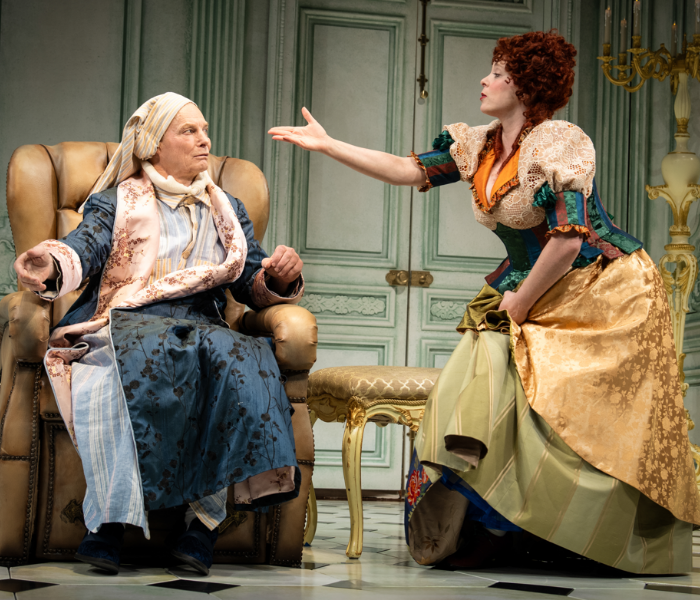
Star Bill Irwin and director Brandon J. Dirden on how they’ve reimagined Molière’s comedy for Broadway
—
Molière’s final play The Imaginary Invalid was written almost 350 years ago and last played Broadway in the 1960s. So adapter-star Bill Irwin and director Brandon J. Dirden knew breathing new life into this old classic would require reinvention.
“We don’t really know how they did it [originally],” says Irwin, who plays Argan, the narcissistic hypochondriac referenced in the title. “What was it they thought of as theatre? There’s no way we can go back to that. You can’t do The Imaginary Invalid without invoking Chekhov and also Lucille Ball. It was freeing in a way that oddly feels like we can serve the master playwright with this in mind.”
The comedy revolves around Argan, a man convinced that his end is nigh. He obsessively pursues endless medical interventions while forcing his household to bend to his intricate therapies, even trying to marry his daughter off to a doctor so he can have one in the family. Originally three acts with elaborate musical and dance interludes, this Roundabout Theatre Company revival, playing through November 22 at Broadway’s Todd Haimes Theatre, runs only 90 minutes with no intermission.
Irwin and Dirden, a celebrated actor making his Broadway directorial debut, have very different timelines on how the production came together.
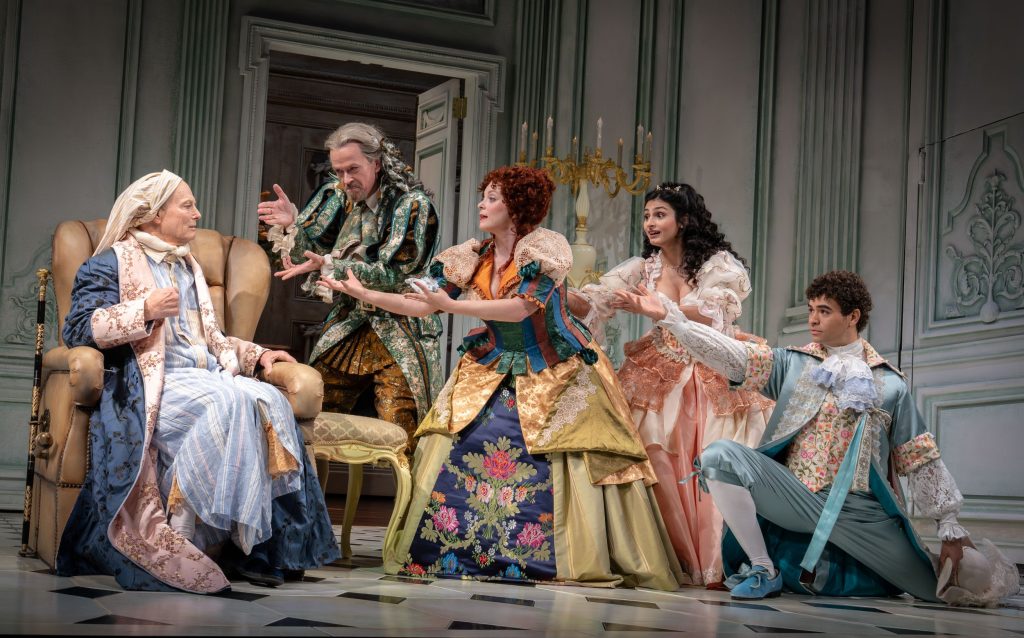
For Irwin, a Tony-winning actor and consummate clown, it has been decades in the making. “I’ve been carrying this play around since I was in high school,” he says. “This is often the case with a theatre idea. You carry it and you carry it and then it starts to make sense as you get older. You realize, oh, it’s about being old! I was carrying it around thinking it’s a laugh machine but it’s a family melodrama, too.”
For Dirden, who didn’t spend decades ruminating on the play, the production followed “a shot out of a cannon trajectory” that began last fall when he invited Irwin to be a guest in a class he was teaching at NYU. Irwin asked Dirden if he could bring in his just completed The Imaginary Invalid adaptation to hear the students read it aloud; that turned into a mounting at the college this past spring. Right around that time, Scott Ellis, then the interim artistic director at Roundabout, approached Irwin to see if he was working on anything new. And just like that, The Imaginary Invalid was Broadway bound.
While Dirden has directed many shows regionally, this is his first time staging Molière. He says he looked to Irwin for guidance.
“With Bill, you know you’re going to learn something and you’re going to have a grand time,” says Dirden, who previously acted alongside Irwin in August Wilson’s Gem of the Ocean at New Jersey’s Two River Theater. “He is one of the most generous and finest artists because of how open he is to exploration, but how exacting he is at the same time. It’s a very rare quality. I knew I was going to be a better artist if I went through this experience with him.”
As they dove into Irwin’s adaptation, they agreed that the key to making this Molière comedy click with contemporary theatregoers was to ground the play in reality. “It’s part farce, part satire, part melodrama, but the audience expects to see real human beings,” says Dirden. “Finding that blend of taking care of both the play and our 2026 expectations of seeing real relationships we can care about has been such a beautiful, interesting challenge.”
That said, they knew they could only go so far in terms of changes. Considering some of the antiquated plot points—particularly the unscientific medical treatments and Argan trying to force his daughter to marry against her will—The Imaginary Invalid remains set when it was written. “We are absolutely steeped in the values of 1673 as it relates to these relationships,” Dirden says. “We don’t confuse ourselves with cell phones or other modern conveniences. Everyone is fighting with wit and humor and not the trappings of modern technology.”
This is certainly a cast that knows how to fight funny: three-time Tony nominee Brooks Ashmanskas is Argan’s unscrupulous doctor, Dylan Baker is his perpetually annoyed brother and in her Broadway debut, Crazy Ex-Girlfriend Emmy winner Rachel Bloom is his deliciously cheeky maid.
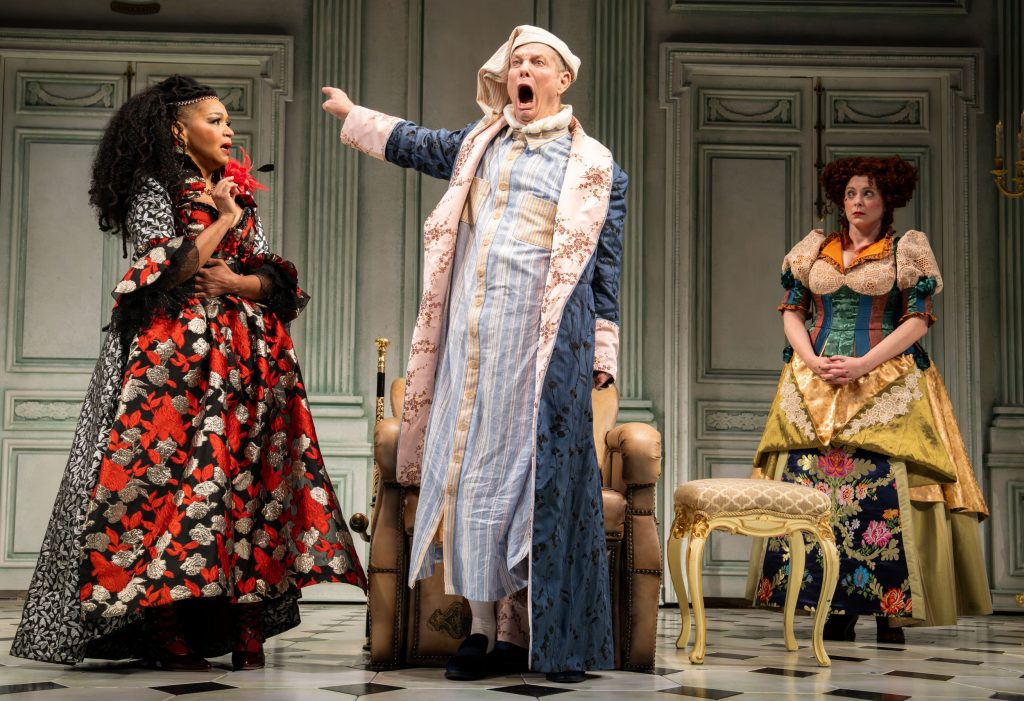
They’re actually the ones running around doing the slapstick because, even though Irwin is celebrated for his physical comedy, Argan is so allegedly frail, he spends most of the show sitting in a single, central chair. It’s a constraint that created challenges and opportunities since Irwin is only able to use his voice, face and upper body.
“In one way that’s been the biggest gift,” Dirden says. “We have these parameters to try and work around. Some of my favorite gags and physical bits started with somebody saying, ‘Hey, let’s see what would happen if I did this.’ My dream was to approach this play like Molière did. He presented these plays with a troupe, and he wrote to their strengths. It was always conceived as an ensemble experience, never just a star vehicle.”
The Imaginary Invalid is not Irwin’s first dance with Molière: 30 years ago, he co-adapted and starred in a production of Scapin, also for Roundabout. While Molière may not be as beloved as the Bard, he has been enjoying a renaissance of late, in fact, there were two different Off-Broadway productions of The Imaginary Invalid last year.
Still, the prolific 17th-century French playwright and performer—who, ironically, died while playing Argan during the show’s world premiere—is rarely done on Broadway compared to other classic dramatists. Irwin believes he knows why.
“I can talk endlessly on this,” he says. “We Americans of my generation tend to be grounded in some kind of reverence for Greek culture. It’s like a bedrock, then Roman culture, and then we skip across the continent to Elizabethan language because it is, at some level, our mother tongue. Yet when I look back, my Eurocentric notion of things sort of skips over France.”
Irwin thinks that’s a shame considering Molière’s sensibility is evident in contemporary comedy. “The relationship between Molière and the sitcom is so vivid,” he says. “This is about what would Lucy do to get back at Desi? You can just feel the DNA between the two. In The Imaginary invalid, you can see that structure, where Molière, to a great extent, was the straight man for people whose comedy he loved and revered. I feel the delight of that during certain stretches of the play. Let’s see if I can get this line in here that will perfectly set Rachel Bloom up, so that she can hand it off to Brooks Ashmanskas. Then I’m in heaven.”
—
The Imaginary Invalid is frequently available at our TKTS Discount Booths.
TDF MEMBERS: Log in to browse our latest discounts for theatre, dance and music.